Cart
0
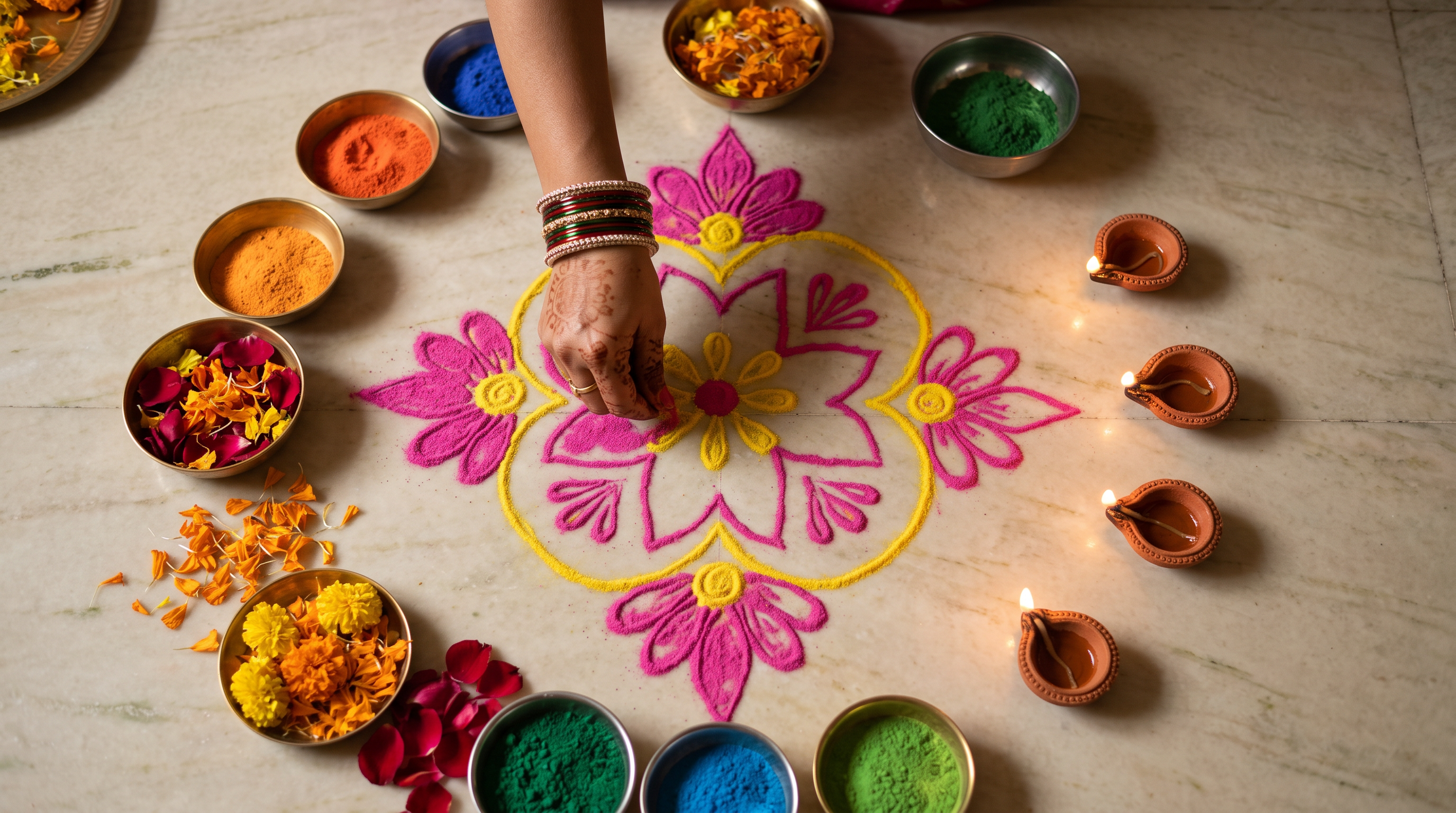
A rangoli at the doorstep is one of the oldest welcomes in Indian homes. It takes only a little time, a few simple materials, and a clean floor, yet it gives the entrance a warm, celebratory look that guests notice straight away. You do not need years of practice to make one. Most beginner designs are built from dots, circles, and simple petals, and they can be finished in under half an hour.
This guide explains how to prepare for a rangoli, which materials to use, and four easy designs that suit beginners. It also covers colour choices, safety, and how to keep the rangoli looking fresh through the festival.
Prepare the floor first
A rangoli looks best on a clean, dry, flat surface. Sweep the area thoroughly, and wipe away dust and loose dirt. If you are working outdoors, choose a spot sheltered from strong wind and rain, since a breeze can scatter the powder. For a sharper result, place a sheet or a tray under the design, so you can move it or clean it easily.
Choose your materials
Rice flour is the traditional base for many rangolis. It gives soft white outlines, and it is widely used in many regions. Coloured rangoli powder fills the shapes with bright colour. Chalk is useful for practising the grid and the outline before you commit to colour. Flower petals, such as marigold and rose, make a natural alternative, and they keep the design fresh and fragrant.
Buy a small packet of four to six colours rather than a large set, since a limited palette often looks more elegant. Keep white for the outlines, and check that powders are suitable for the surface you have chosen. Natural materials such as turmeric, kumkum, and coloured rice can also be used, and many families prefer them.
Start with a simple dot grid
Most beginner rangolis begin with a dot grid. Mark a five-by-five or seven-by-seven grid of dots on the floor with white rice flour or chalk, keeping the spacing even. You can use your fingers as a guide, or a length of string for a straight line. The grid gives you a structure to follow, so the design stays balanced.
Design one: the five-dot flower
Mark a plus shape of five dots, with one at the centre. Draw four curved petals that connect the outer dots through the centre, so each petal is a single closed shape. Fill the petals with one colour and the centre with another. Add a small circle of white at the centre for a clean finish. This design takes about ten minutes and suits beginners well.
Design two: concentric circles
Use a bangle, a small bowl, or a plate to draw three or four circles of different sizes around a centre point. Fill the rings with alternating colours, leaving the outer edge white or in a single shade. Add small dots or petals around the outermost circle for a decorative border. Circles are forgiving, since a slightly wobbly line is often hard to see once the colour is in.
Design three: a simple diya
A diya-themed rangoli suits Diwali particularly well. Draw a simple lamp shape with chalk, with a wide base and a curved top, and a small flame above it. Fill the lamp with orange or red, and the flame with yellow. Place a real clay diya at the centre of the design once it is finished, so the rangoli and the lamp reinforce each other.
Design four: the petal border
A border of simple petals is one of the easiest ways to frame an entrance. Draw a row of small teardrop shapes along a straight line, alternating two colours. Keep the spacing even, and finish with a single line of white dots. A border can also run around a doorway or along a step, which makes the entrance look finished without a large central design.
Colour tips for a bright result
Put light colours next to dark ones, such as yellow beside purple or white beside red, so the shapes stand out. Limit the palette to three or four colours, since too many can make the design look muddy. Fill large areas first and detail last. Use a funnel, a tea strainer, or a folded paper cone to pour the colour neatly.
Keep it looking fresh
Rangoli is delicate, and footsteps, wind, and rain can disturb it. Place the design where people can view it from the side rather than walk across it. If you use flower petals, add them last and spray them lightly with water to keep them fresh, or replace them when they start to wilt. Protect the design with a plastic sheet if rain is expected.
Safety with diyas and powders
Keep diyas a safe distance from loose powder and petals, and never leave a flame unattended near a rangoli. Use the powders carefully around children, and keep them away from eyes and mouths. Wash hands after handling coloured powder. If you have young children helping, give them rice flour or petals rather than synthetic colours, and supervise the work.
A simple rangoli checklist
- Sweep and dry the surface, and choose a spot sheltered from wind.
- Gather rice flour or chalk, a small set of colours, and a few petals.
- Start with a dot grid to keep the design balanced.
- Begin with an easy design, such as the five-dot flower or concentric circles.
- Limit the palette to three or four colours, and place light next to dark.
- Keep diyas away from loose powder and petals.
- Protect the design from footsteps, wind and rain where possible.
A rangoli is a welcome that takes only minutes to make and brings joy to everyone who sees it. For festive decor that complements your doorstep, explore our paintings collection and our wooden wall arts collection.