Cart
0

A room has a mood, even when you are not thinking about it. Some rooms feel lively and open, others feel calm and settled, and many feel somewhere in between. Wall art plays a bigger part in that feeling than most people expect, and horse paintings are one of the most flexible choices. The same subject can feel energetic in one composition and restful in another, depending on how it is painted, what colours it uses, and where it hangs.
This guide explains how a horse painting's movement, stillness, colour and light can shape the mood of a room. It also offers a simple way to match a piece to the job each room needs to do.
Movement brings energy
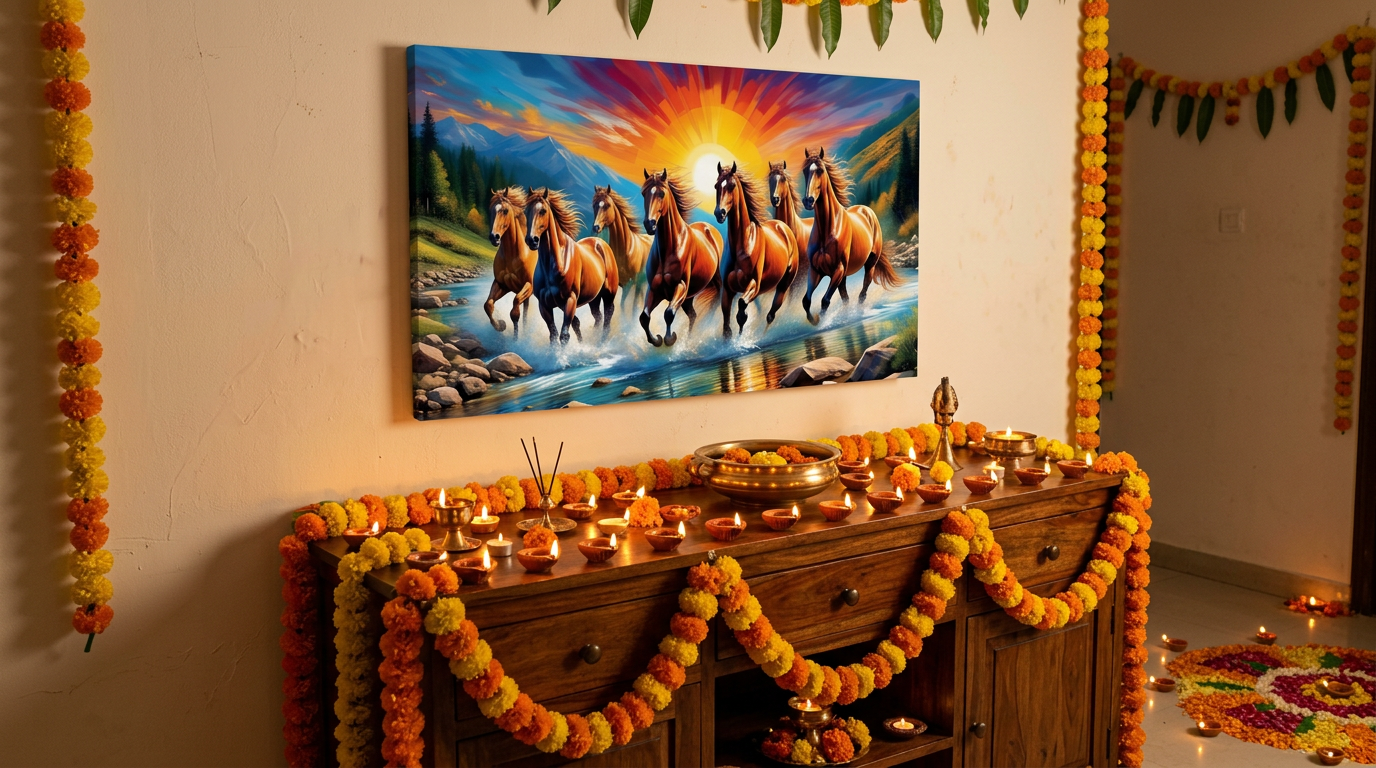
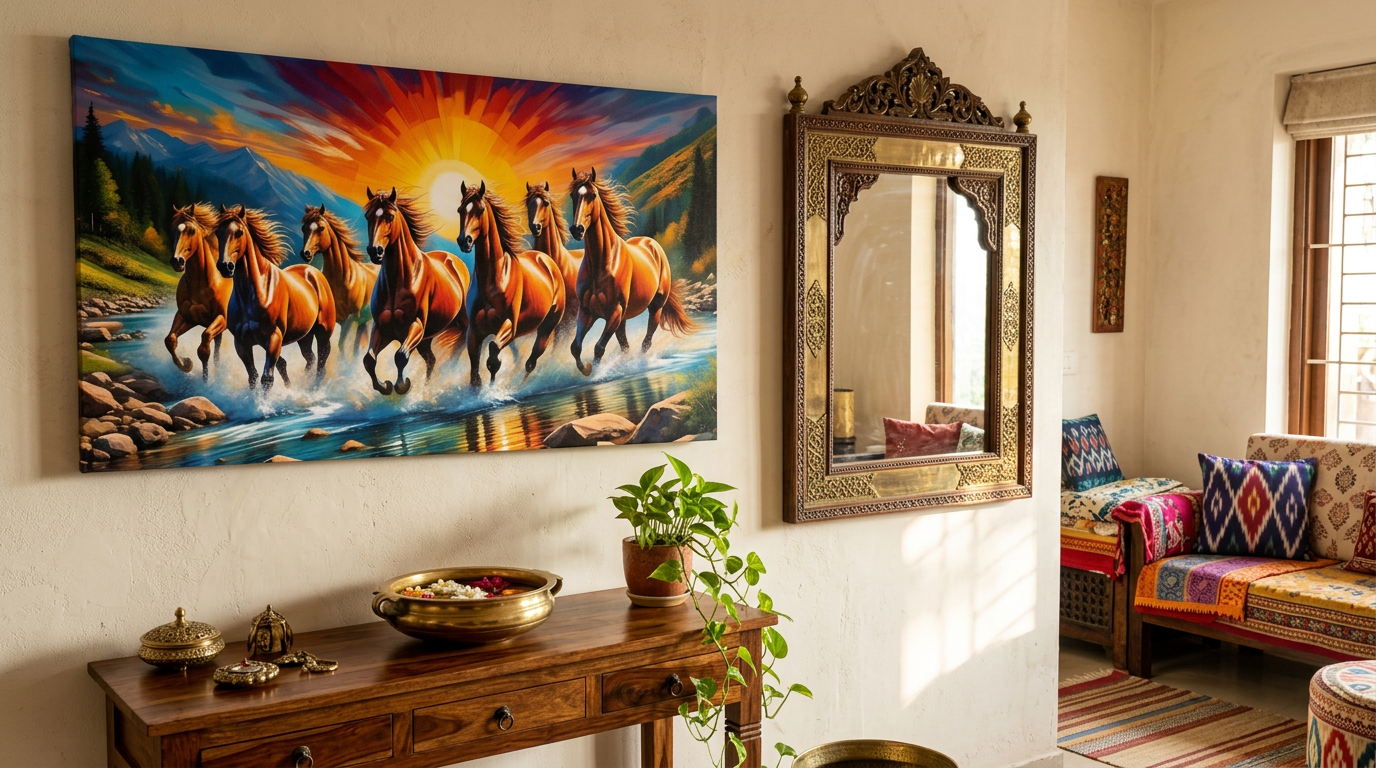
A horse shown in motion, with its legs stretched and its mane lifting, carries a sense of energy. A running horse across an open field tends to lift a room and keep the eye travelling across the wall. This kind of movement suits living rooms where people gather, talk, and move around. Energy can be a good thing, but it can also feel too much in a room meant for rest. Consider how much activity you want in the room before you choose a dynamic scene.
Stillness brings calm
A single horse standing quietly, with soft background tones and open space, slows a room down. Stillness suits reading corners, bedrooms, and spaces meant for pause. The composition does not ask for attention, so it can sit in the background while you rest, read, or think. A calm painting does not have to be dull. A horse in quiet light, with gentle colours and a clear shape, can feel warm and grounded.
Colour sets the temperature
Colour often has the strongest effect on mood. Warm ochres, browns, and golden tones feel grounding and welcoming. They suit traditional Indian interiors with wood and brass, and they can make a room feel cosy in the evening. Cooler blues, greys, and soft greens feel fresh and airy, and they can add a sense of openness to a room that feels closed in. Choose the temperature you want the room to have, then find a painting that matches it.
Light changes everything
A painting that looks bright in a showroom may look dull in a dim room, and a piece that looks calm in morning light may feel heavy in the evening. Light changes how the colours read and how the image feels, so check how the wall is lit at the times of day you use the room most. A warm lamp placed near the painting can bring out its richness after dark. Avoid placing glossy artwork opposite a window, where reflections can distract. A matte finish usually holds its mood in both daylight and lamplight.
Scale affects the mood
Size changes the feeling of a room as much as the image does. A very large horse painting on a main wall creates a strong focal point and can make the room feel more deliberate. A smaller piece feels more intimate, and it suits a quieter corner or a bedroom. As a common guideline, a painting above a sofa often looks balanced when it covers about two-thirds of the sofa's width. Use this as a starting point, then check the feeling of the room with a paper template on the wall.
Match the mood to the job of the room
Start by asking what you want the room to do. A living room where family and guests gather often benefits from energy and warmth, so a horse in motion, in warm tones, suits it well. A bedroom where you rest and wind down suits calm, so a single horse in soft colours, placed above the bed, can support rest. A home office suits a balanced feeling, with a clear, open scene that supports focus without pulling your attention away. A dining area often suits warmth, since the painting sits alongside the table and the lighting used for meals.
Think about how often you see it
A painting that you see every day has a different job from one that you see only occasionally. In a hallway or a room you pass through several times a day, a clear, calm painting can set a steady tone. In a room where you sit for long periods, the painting should be easy to live with over time. Avoid very bold or busy images in places where you spend many hours.
Consider the other elements in the room
The mood of the painting interacts with everything else in the room. Furniture, cushions, rugs, lamps, and plants all contribute to the feeling. If the room is full of bright colour and pattern, a calm painting can balance the space. If the room is simple and neutral, a bolder painting can bring life to it. Step back and look at the whole room. The painting should feel like part of the room, not something placed on top of it.
Traditional guidance on mood
Many people also look to traditional guidance when choosing a painting's mood. Vastu guides often recommend uplifting imagery for shared rooms and calmer subjects for bedrooms, and they commonly advise against heavy, gloomy, or aggressive scenes. Vastu is a traditional practice rather than a scientific one, so treat this guidance as a matter of personal belief. Many people find that the principles of calm and balance also make good design sense, regardless of tradition.
A simple way to choose
- Decide what the room is for, and what mood it should support.
- For energy, consider a horse in motion in warm tones.
- For calm, consider a single horse in soft colours with open space.
- Choose warm tones for cosy rooms and cool tones for airy ones.
- Check the painting in morning and evening light before you buy.
- Match the size to the furniture, and test it with a paper template.
- Avoid very busy or dark images where you spend long periods.
A horse painting is more than a decorative object. It can set the tone of a room and make it feel like home. Explore our horse paintings collection to find a piece that matches the mood you want.