Cart
0
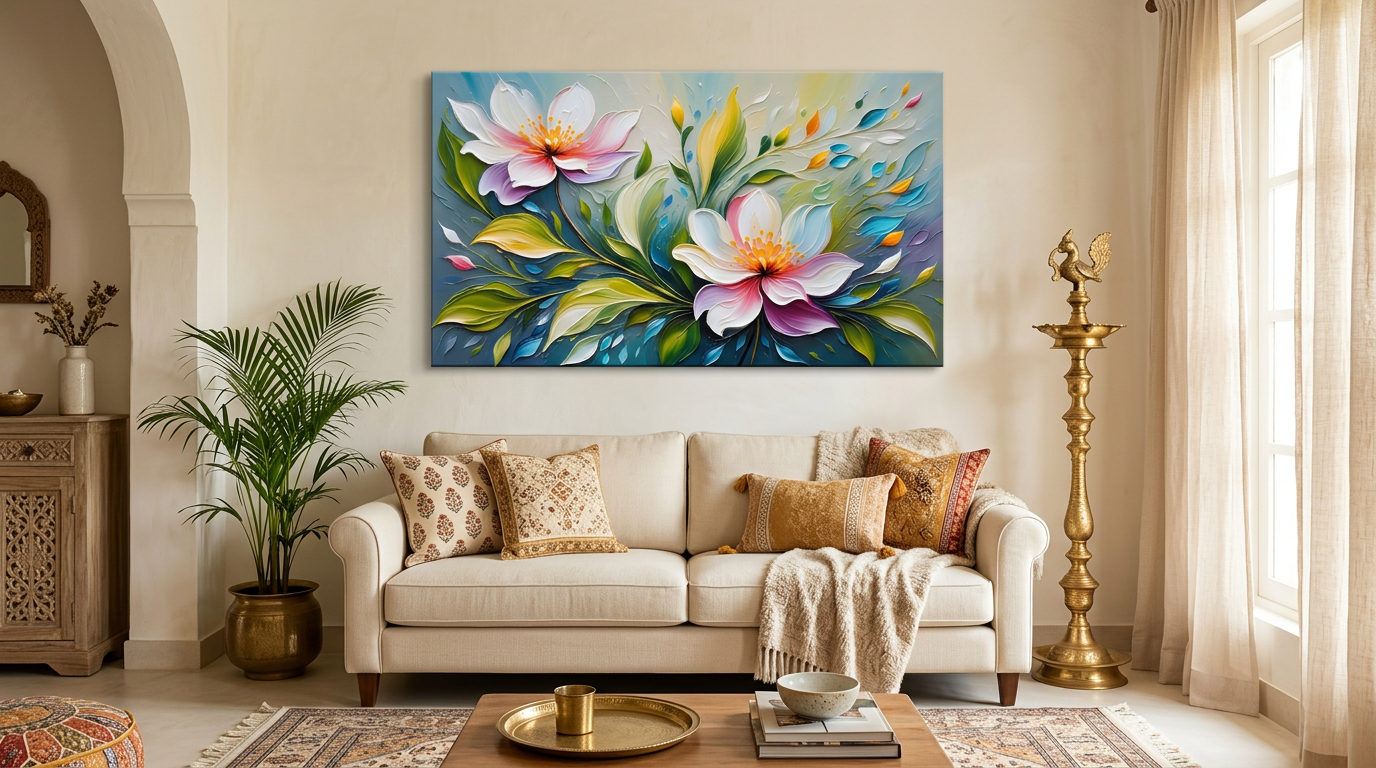
Getting good value from a canvas painting does not mean buying the cheapest one. Many homes look better with one well-chosen piece than with several smaller ones that compete with each other. If you are working to a budget, the aim is to spend wisely, so the piece you buy looks right on your wall, suits your room, and keeps its place for years.
This guide explains how to get good value from a canvas painting. It covers where to put your money, how to compare listings properly, and which details matter more than the price on the page.
Put your budget into one statement piece
Instead of filling every wall with small pieces, choose one focal point. Most people notice the first large artwork they see in a room, so a single canvas on the main wall often does more for the space than several small prints scattered around it. Once you have a strong anchor, you can add a mirror, a clock, or a shelf later as your budget allows. A single well-scaled piece also looks more deliberate. A group of small items can look as though it has grown without a plan, while one substantial canvas gives the room a clear centre.
Compare like with like
Two canvas paintings can have similar sizes and very different finishes. When you compare listings, check the same details on each: the canvas type, whether the piece is hand-finished or printed, whether it is stretched and finished neatly, whether a frame is included, and the exact dimensions. A slightly higher price for a better finish often lasts longer and looks more premium on the wall. A lower price is only good value if the size is right, the finish suits the room, and the packaging and delivery terms are clear. Before you decide, add up the total cost, including shipping, packing, framing, and any hanging hardware.
Prioritise size over detail
In most living rooms, a large, simple canvas looks more expensive than a small, intricate one. Scale creates impact, and it helps the piece hold its own against the furniture beneath it. If you must choose between a bigger, simpler piece and a smaller, more detailed one, the bigger piece usually gives better value for the room. A common designer guideline is to aim for the canvas to cover roughly two-thirds of the furniture's width. Measure your wall and furniture first, then look for sizes that fit.
Choose a neutral background
Canvases with soft, neutral backgrounds are easier to style and suit more homes. They also work with changes in your décor over time. A bright, highly specific background can feel dated more quickly, and it can be harder to pair with new cushions or rugs. A neutral background gives you flexibility. If you later change the sofa or the rug, the canvas will still fit the room.
Look closely at the finish
Finish affects both appearance and how the piece holds up. A matte finish reduces glare, which helps in bright rooms. A glossy finish can make colours look richer, but it can reflect windows and lamps. Check the listing for the finish, and look at close-up photos to judge the surface. Check whether the canvas is stretched tightly over its frame and whether the edges are finished neatly. A well-stretched canvas looks more professional and holds its shape over time, which often matters more than the price difference.
Consider a gallery wrap
A gallery-wrapped canvas, where the image continues around the sides of the frame, needs no separate frame. This can keep the total cost down while giving a clean, modern look. If you prefer a framed finish, check whether the frame is included, or whether it would add to the price. A framed option can look more finished, but it is often heavier, so check the weight as well.
Check the hanging hardware
Check whether the hanging hardware is included. Some canvases arrive with wire or hooks attached, while others do not. Confirm this before you order, and choose fixings that suit your wall type and the weight of the piece. A hardware cost that you have not planned for can quietly raise the total.
Read the delivery and return terms
Good value includes a piece that arrives safely. Large canvases need careful packaging, so check how the painting will be packed, whether it will be shipped flat or in a tube, and whether corner protection is included. Ask about the expected delivery time, and whether the seller offers protection against damage in transit. Read the return and damage policy before you pay. Find out how long you have to report damage, what photos the seller needs, and who pays for return shipping. Keep the packaging until you have inspected the piece.
Plan the hanging to avoid mistakes
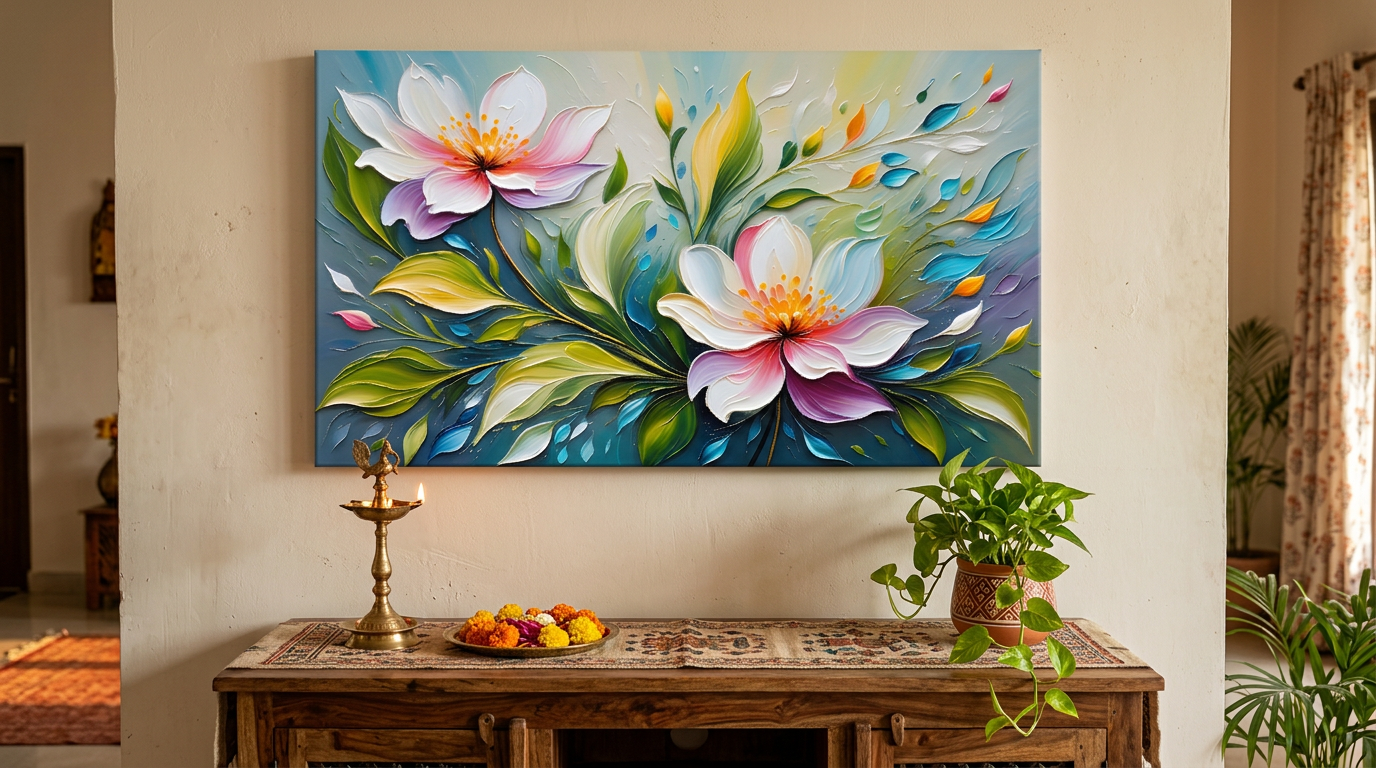
Once the canvas arrives, use a paper template to test the position before you drill. For most living rooms, hang the centre of the painting roughly 57 to 60 inches from the floor. Where there is furniture below, the frame often looks best a few inches above the sofa or console. A well-hung canvas looks more expensive than it is. Keep the wall around it clear, and let the painting be the focus of the room.
Look after it so it lasts
Looking after the canvas is part of getting good value. Dust it gently with a soft, dry cloth, and avoid spraying cleaner onto the surface. Keep it out of direct sunlight, away from bathrooms and damp walls, and check the hanging hardware every few months.
A value checklist
- Choose one statement piece for your main wall.
- Compare listings on size, canvas type, finish and frame, not just price.
- Prioritise size over detail for the most impact.
- Choose a neutral or soft background for flexibility.
- Check the stretching and edge finish.
- Confirm whether a frame is included and whether hardware is supplied.
- Add up the total cost, including delivery, packing and any extras.
- Read the delivery, damage and return terms before you pay.
A canvas painting that fits your wall, suits your room, and arrives in good condition is good value, whatever its price. Explore our canvas paintings collection and compare sizes and finishes side by side.