Cart
0

Renting does not mean giving up on wall art. A horse painting can bring warmth, movement, and character to the rooms you live in, as long as you choose safe ways to hang it and plan for moving out. Many people in India's cities rent their homes, and decorating a rental can feel limiting when you cannot drill holes freely or repaint the walls. The key is to choose safe hanging methods, plan the placement carefully, and leave the walls as you found them when it is time to move.
This guide explains how to decorate a rental with horse paintings without causing damage. It covers how to check with your landlord, which hanging methods suit different walls and weights, how to lean a painting instead of hanging it, and how to remove pieces cleanly at the end of your tenancy.
Start with your landlord
Before you hang anything, check with your landlord or the property manager. Some landlords are happy for tenants to hang pictures, provided the walls are not damaged. Others have specific rules about wall fixings, and some ask that holes be made only in certain places or repaired before you leave. A short, friendly conversation saves trouble later. Ask what is allowed, whether there are any restrictions on the type of hardware, and whether any repairs will be expected at the end of the tenancy. Get the answer in writing if you can, since it protects you both.
Look at the walls before you choose
Different walls behave differently. Plaster, painted brick, and plasterboard each take fixings in different ways, and some surfaces are more delicate than others. Look for old holes, cracks, or flaking paint, since these areas can give way under a heavy piece. Also look at the paint. Some paints lift easily when adhesives are removed, so test any adhesive product on a hidden spot before you use it on a visible wall.
Choose a lighter piece
Weight matters more in a rental, since heavier pieces need stronger fixings. A canvas painting is usually lighter than a heavy framed piece with glass, which makes it easier to hang safely with small, removable fixings. If you have a choice, favour a lighter canvas or a slim frame. Check the weight before you buy, if the listing gives it, and compare it with the weight rating of the hanging hardware you plan to use, leaving a comfortable margin.
Use hanging methods that are safe to remove
There are several ways to hang a light painting without drilling. Picture hooks designed for your painting's weight are one option. Adhesive strips or hooks made for art can also work, but only when they are rated for the weight and used as the manufacturer directs. Follow the instructions carefully, and press the strip firmly for the recommended time before you hang the piece. Avoid anything that could tear paint, lift plaster, or leave a residue. If you are unsure whether a product is suitable, test it on a hidden spot first, and ask your landlord before you use it on a visible wall.
Lean the painting instead of hanging it
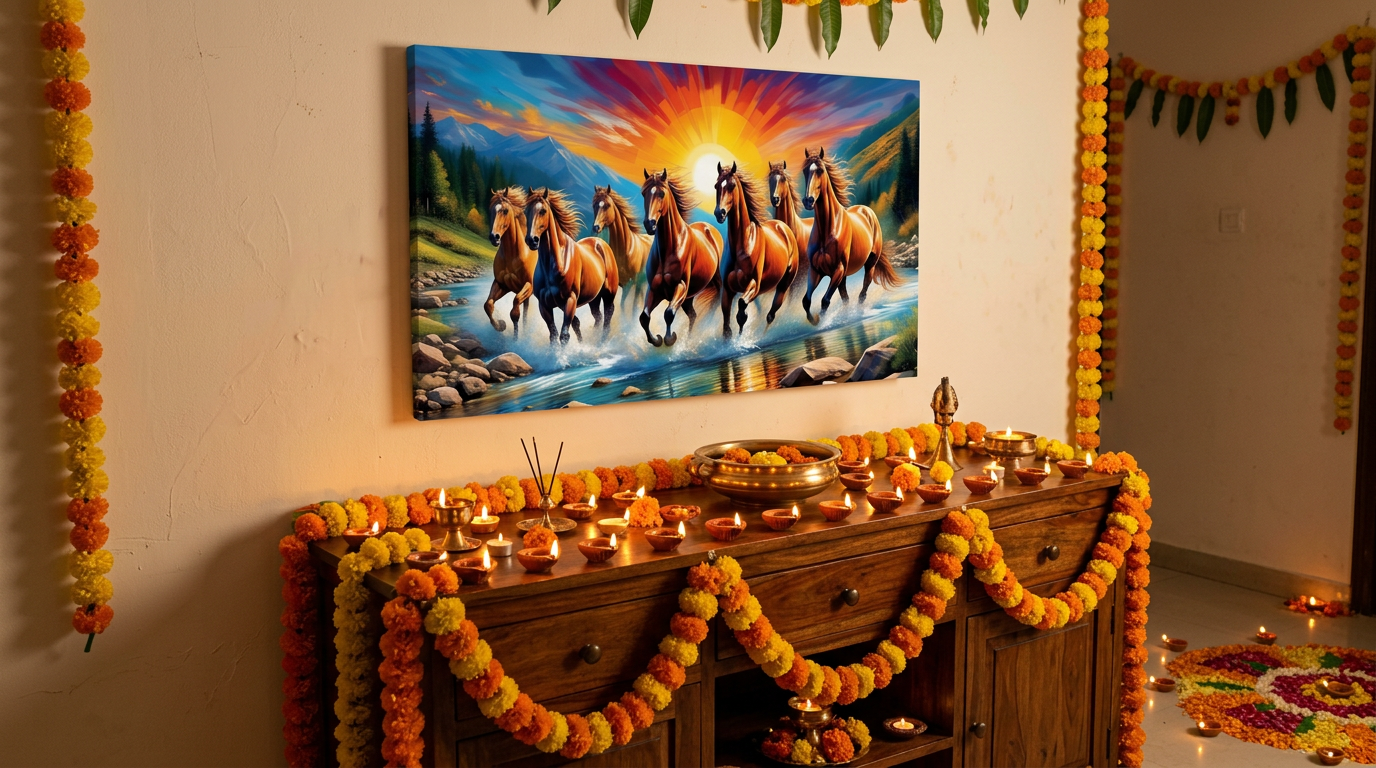
A large horse painting can rest on a console, shelf, sideboard, or the floor against a wall, which avoids fixings entirely. This is a good option for a rental, and it has a relaxed, lived-in look that many people enjoy. When you lean a painting, place it on a stable surface and angle it slightly against the wall. Keep it away from doorways and places where it could be knocked, and make sure the furniture beneath it is steady. For a painting on the floor, add a soft felt pad or a small wooden block to keep the frame from touching the floor directly.
Plan the placement before you hang
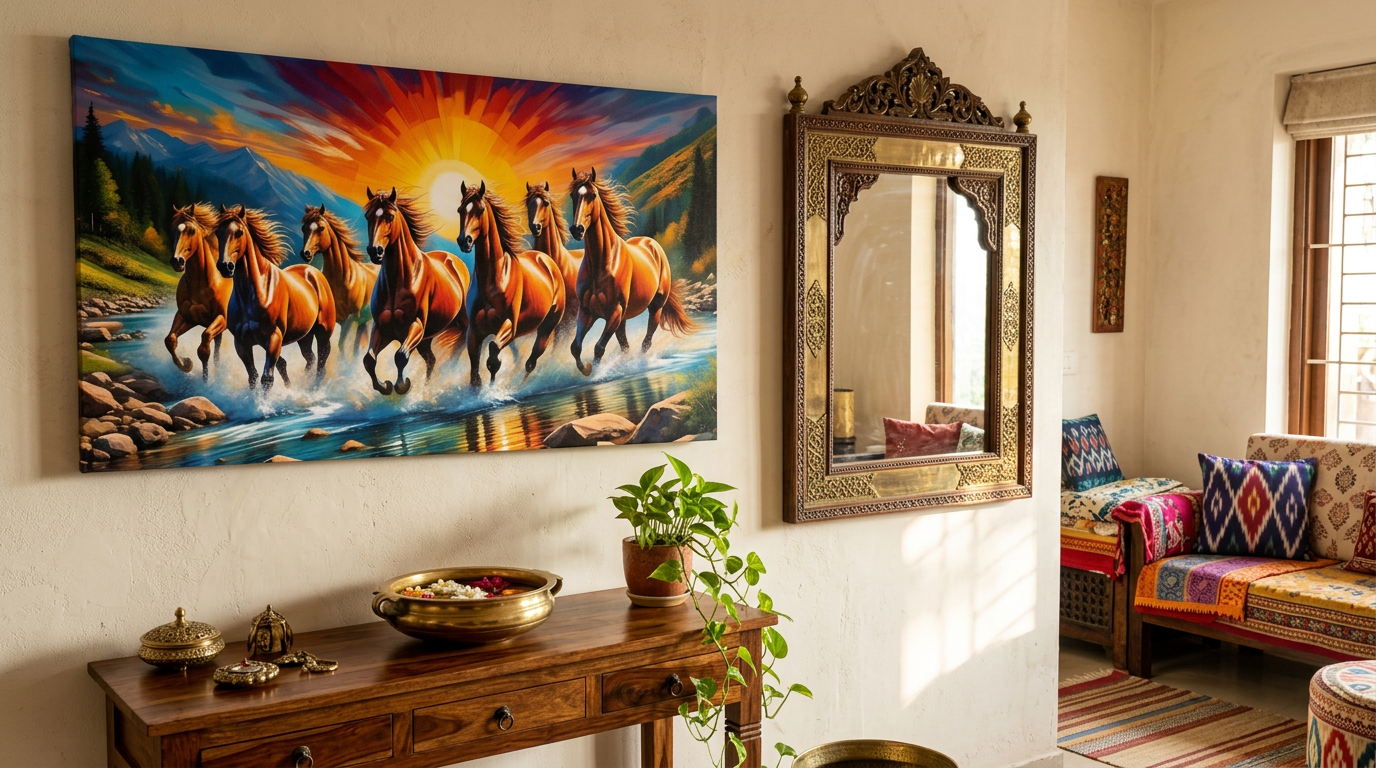
Measure the wall and the furniture beneath it, and choose a size that suits both. A common designer guideline is to aim for the painting to cover roughly two-thirds of the furniture's width. Use a paper template taped to the wall to check the position before you add any fixings. This avoids unnecessary holes and gives you a clear view of how the piece will look. If you are unsure about the height, the usual guideline is to place the centre of the painting around 57 to 60 inches from the floor. Where there is furniture below, the frame often looks best a few inches above the sofa or console.
Keep the wall safe
Make sure the fixings you choose can hold the weight of the piece. For any fixing that goes into the wall, check that the anchor suits the wall type. Do not hang heavy pieces from fixings that are only designed for lighter items. Check the fixings every few months. A loose hook or a weakening adhesive strip can let a painting fall, which can damage both the piece and the wall.
Protect the piece and the room
Keep the painting out of direct sunlight, which can fade colours over time. Avoid placing it near bathrooms and kitchens, where humidity can damage frames and canvas. Dust it gently with a soft, dry cloth, and keep it away from the paths of children and pets. These habits protect both the artwork and the room, which is especially important in a home you do not own.
Remove pieces carefully at the end
When it is time to move out, take the painting down slowly. For adhesive strips, pull the tab gently downwards and at a low angle, rather than straight out, and stretch the strip slowly along the wall. This reduces the chance of lifting paint or plaster. If a strip does not come off easily, warm it gently with a hairdryer on a low setting, then continue slowly. For fixings that went into the wall, remove the hook or anchor and fill the small hole with the filler your landlord recommends. Keep the original hardware if you have it, so you can make a neat repair. If the landlord expects a specific repair, follow it, since that protects your deposit.
Use the painting to make the rental feel like home
A rental does not have to feel temporary. A horse painting can make a room feel settled and personal, even when you are not sure how long you will stay. Choose a piece you enjoy, place it with care, and let it carry the feeling of home through the rooms you live in.
A rental checklist
- Check with your landlord about wall fixings and repairs, ideally in writing.
- Inspect the walls for old holes, cracks, and fragile paint.
- Test adhesive products on a hidden spot before using them.
- Choose a lighter canvas or slim frame where possible.
- Check the piece's weight against the hanging hardware's rating.
- Consider leaning the painting on a console or shelf instead of fixing it.
- Use a paper template to plan the placement before adding fixings.
- Keep the painting away from sun, damp and busy walkways.
- Remove adhesives slowly, and repair holes as your landlord expects.
A horse painting can bring character to a rental without causing lasting damage. Browse our horse paintings collection for lighter pieces that suit rented homes.