Cart
0
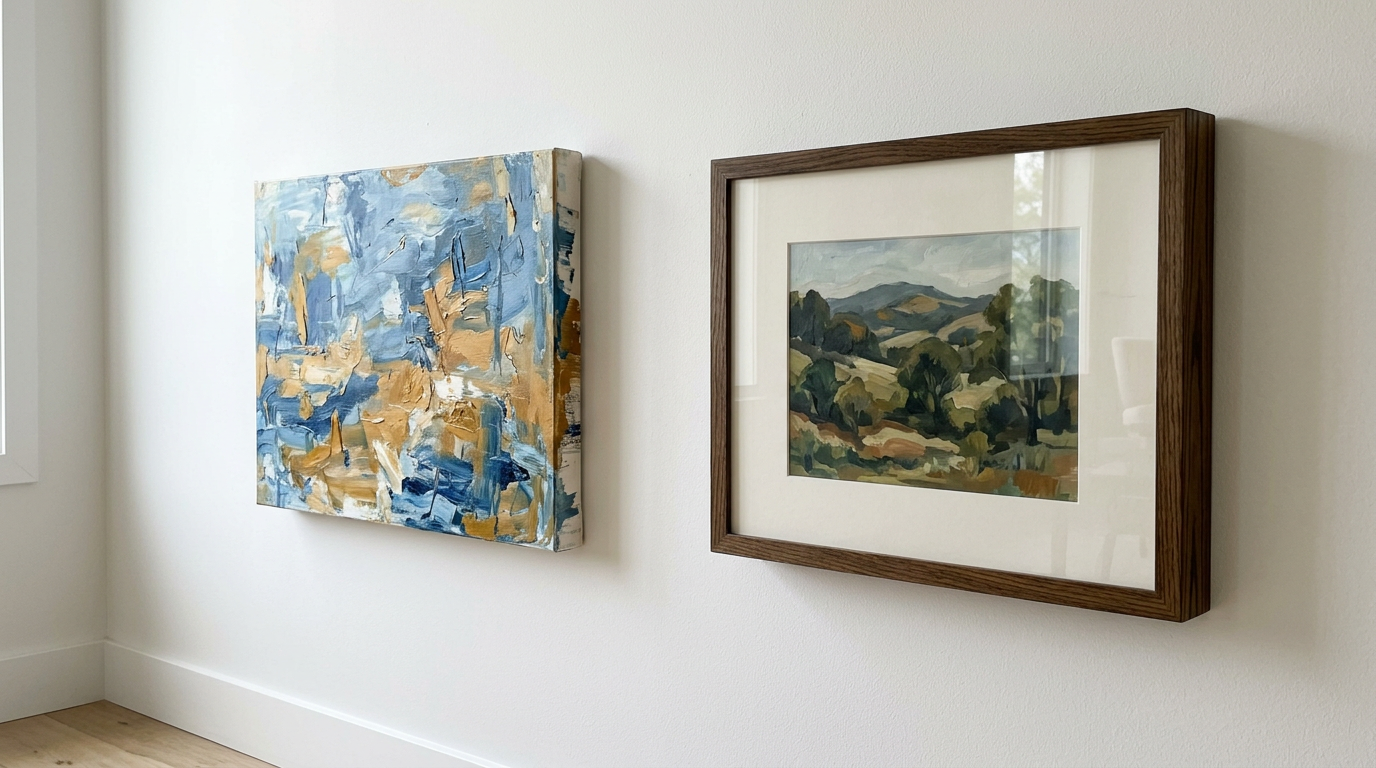
Choosing wall art often comes down to two questions: what the artwork looks like, and how you want it presented. Canvas and framed wall art can show the same image, yet they look and behave differently on the wall. Canvas has a soft, textured, frameless look. Framed art has structure, a finished edge, and usually a layer of glass or acrylic in front.
Neither format is better in every case. The right choice depends on the artwork itself, the light in your room, how heavy the piece is, and whether you rent your home. This guide explains the trade-offs so you can decide with confidence.
What canvas wall art offers
Canvas is printed or painted on fabric, usually stretched over a wooden frame. Most canvas wall art is gallery wrapped, meaning the image continues around the sides of the frame, so the piece can hang without a separate frame.
- No glare. Canvas has a matte surface that does not reflect light the way glass does. This makes it easier to see in bright rooms, near windows, or under strong lamps.
- A softer, textured look. Brushwork, texture, and tonal variation often show more clearly on canvas, which suits painterly and abstract art.
- Lighter weight. Without a heavy frame or glass, canvas is generally easier to lift and hang, which helps with larger pieces and with fixings in rented homes.
- A relaxed, contemporary feel. Canvas suits modern, minimal, and casual interiors.
Canvas also has limits. The fabric surface can be more delicate than a protected print, and it can show dust and marks over time if it is not looked after. Canvas can feel less formal, so it may not suit a traditional room with lots of wood and classic detailing.
What framed wall art offers
Framed art usually places a print or artwork behind glass or acrylic, inside a frame. The frame creates a clear edge between the artwork and the wall, which gives the piece a more finished and formal appearance.
- Protection. The glass or acrylic layer shields the surface from dust, handling, and some environmental wear.
- Suitability for detail. Framed art often works well for photography, illustrations, typography, and fine linework, where sharpness and clean edges matter.
- Structure and polish. A frame can make a piece feel more considered, which suits traditional rooms, studies, and formal spaces.
- Wide choice of finishes. Frames come in many colours and materials, so the piece can be matched to furniture and wall tones.
Framed art also has trade-offs. Glass can reflect light from windows and lamps, which can make the artwork harder to see from some angles. Framed pieces are usually heavier and can take more effort to hang, and larger frames may need stronger fixings.
Glare: the question most people overlook
If your room gets a lot of daylight or has lamps close to the wall, glare can change the experience of a piece completely. Canvas is generally the better choice for bright, sunny rooms. Framed art with non-reflective glazing can reduce glare, but it may cost more, so check the listing for the glazing type.
Match the format to the artwork
Painterly and textured art usually suits canvas. Visible brushwork and tonal depth come through clearly, and the soft finish feels natural. Detailed or high-contrast art often suits a frame. Photography, illustration, fine line drawings, and typography can look sharper and cleaner behind glass. Pieces with a traditional or devotional feel often sit well in a frame, since the frame gives them a sense of completeness. This is a matter of style rather than a rule, so trust what looks right in your home.
Size and cost
Canvas is often more economical for large pieces. A large framed print needs a bigger, heavier frame and glazing, which increases both the price and the difficulty of handling it. For a wall that needs filling, a single large canvas is often the simplest way to make a statement. For small and medium pieces, framing can be worth the investment, especially where the artwork is valuable to you or needs protection. Compare the total cost of the piece as listed, including the frame and any glazing, rather than only the artwork itself.
Protection and care
Canvas is durable in normal indoor conditions, but it benefits from gentle care. Dust it with a soft, dry brush or cloth, avoid touching the surface, and keep it away from damp areas and strong direct sunlight. Glazed frames are easier to wipe clean, but the glass or acrylic needs careful handling. Whichever format you choose, keep it out of direct sun, away from bathrooms and kitchens, and check the hanging hardware every few months.
Renting and moving
If you rent, weight and fixings matter. Canvas is usually lighter, which means smaller fixings and less wall damage. Framed pieces, especially large ones, may need more substantial fixings and can be harder to move. Both formats can be leaned on a console or shelf to avoid fixings altogether.
Can you mix them?
Yes. Many rooms look best with a mix of formats, as long as the pieces share a colour story or a style. A large canvas can anchor a wall, while two or three smaller framed pieces add detail around it. A framed canvas is also an option, combining the soft texture of canvas with the finished edge of a frame.
A simple way to decide
- Is the room bright? If yes, favour canvas to avoid glare, or choose non-reflective glazing if you prefer a frame.
- Is the artwork detailed or photographic? If yes, a frame often shows it best.
- Is the piece large? For big walls, canvas is usually more practical and affordable.
- Is the wall in a busy, high-traffic area? Framed art offers extra protection there.
- Do you rent? Lighter canvas can make moving and hanging simpler.
- Is the room traditional or contemporary? Frames suit formal and traditional spaces, while canvas suits relaxed, modern interiors.
There is no single right answer. Canvas gives you texture, a soft finish, and easy hanging. A frame gives you structure, protection, and a polished edge. Choose the format that suits the artwork, the room, and the way you live.
Explore both formats in our canvas paintings collection and our paintings collection.