Cart
0
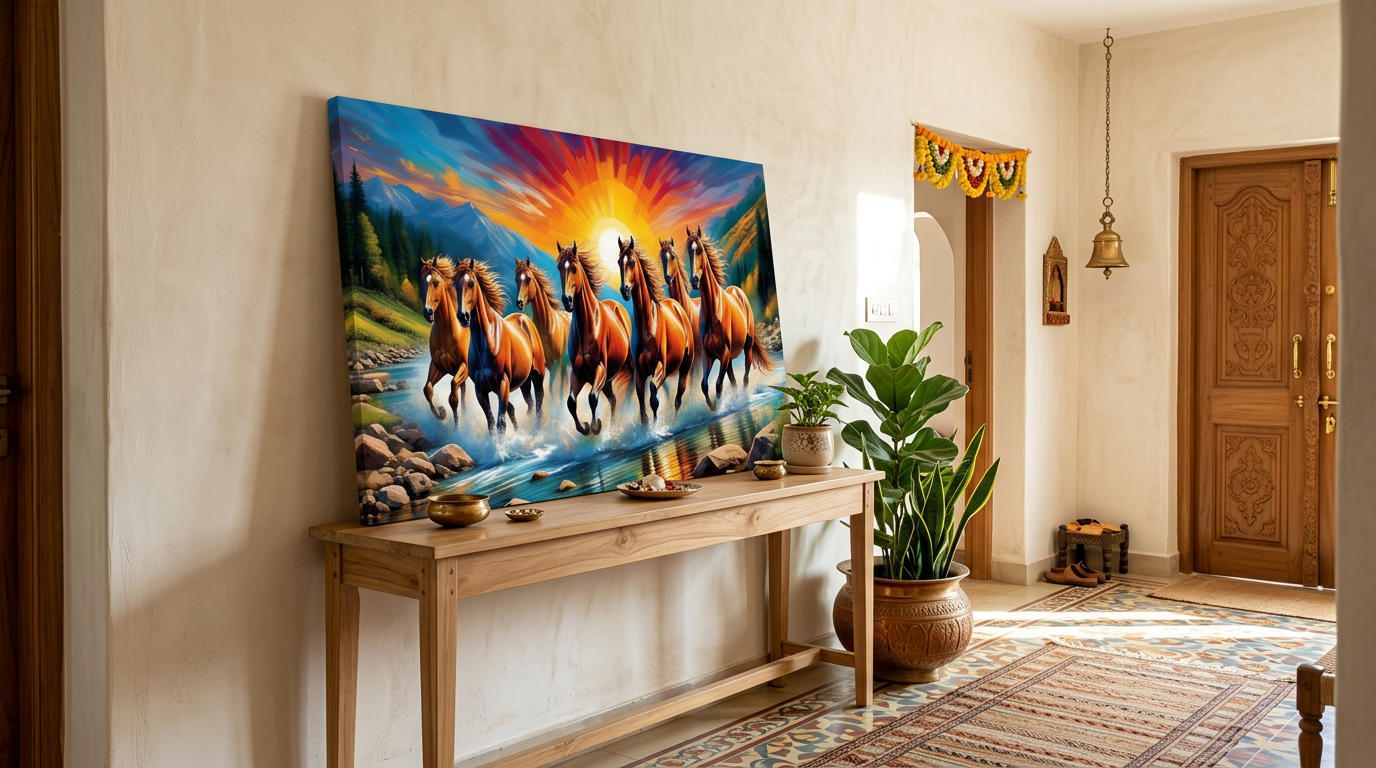
Size is the detail that most often decides whether a horse painting looks right in your home. A piece that is too small can disappear against a large wall, while one that is too big can crowd the furniture and make a room feel cramped. The right size makes the painting feel like it was always meant for that space.
This guide explains how to choose the right size for a horse painting: how to measure your wall, how to relate the piece to the sofa or bed beneath it, how to think about height and ceilings, and how to read the listed dimensions so there are no surprises when the parcel arrives.
Measure the wall first
Start with the wall, not the painting. Measure the full width and height of the wall where the piece will hang. Note the position of windows, doors, switches, and any built-in furniture, since these limit where the painting can go. A wall with a window in the middle, for example, may only have two usable spaces on either side. Write the measurements down and keep them with you when you shop.
Measure the furniture beneath it
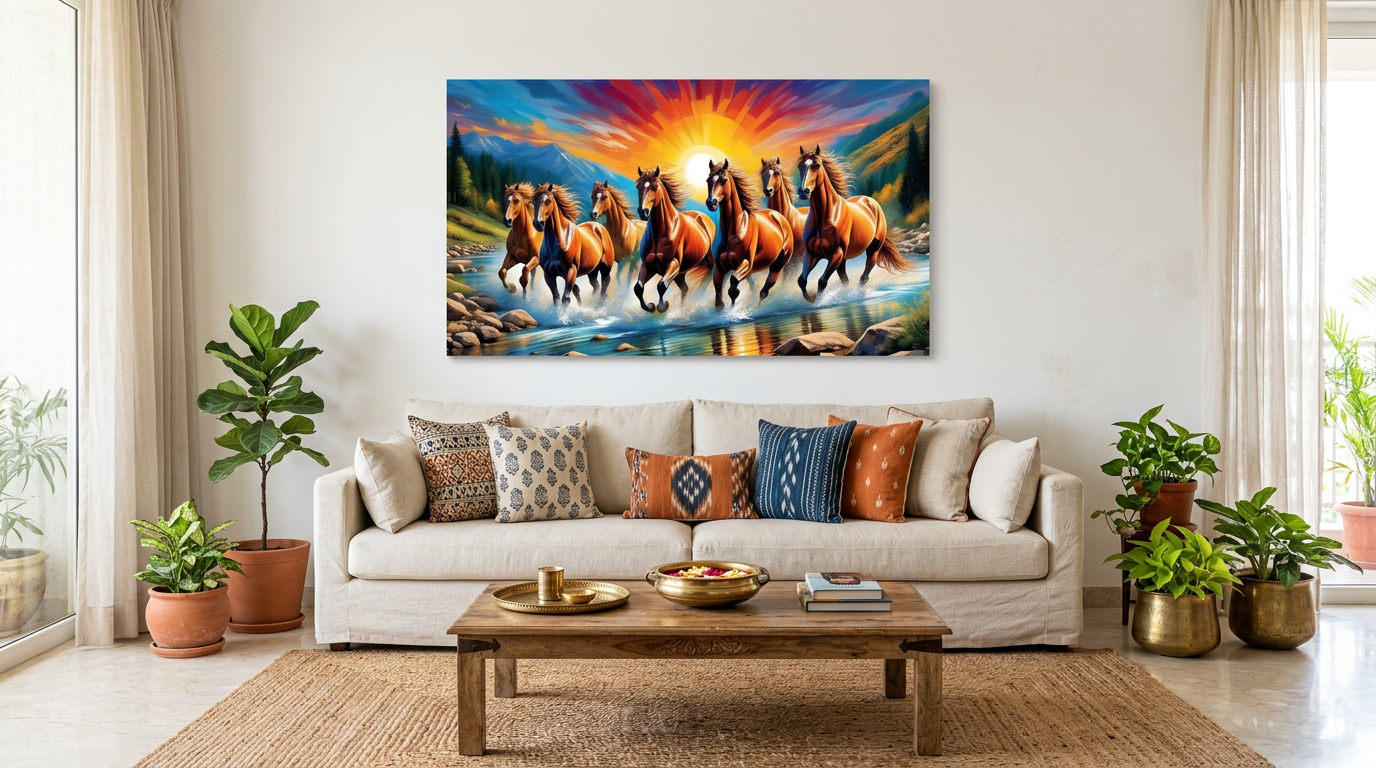
If the painting will hang above a sofa, console, or bed, measure that furniture too. The width of the furniture is the key measurement for choosing the painting's size. A common designer guideline is to aim for the painting to cover roughly two-thirds of the furniture's width. For a sofa, this usually produces a piece that feels balanced and substantial without overwhelming the seating. For a bed, a width of about two-thirds of the headboard often works well.
Use the two-thirds rule with care
The two-thirds rule is a helpful starting point, not a fixed law. A very large sofa may suit a painting that spans a little more than two-thirds, while a small console may suit a narrower piece. The aim is to make the painting feel proportional to what is below it. Use the rule to narrow your choices, then check the result with a paper template. Make a paper outline of the painting at its listed size, tape it to the wall, and live with it for a day.
Consider the height of your ceiling
Tall walls can carry a vertical piece well, since the extra height gives it room to breathe. Lower walls often suit wider, horizontal paintings, which feel more settled and avoid making the ceiling feel even lower. Think about the shape of the wall as well as its size.
Set the height
Most interior guides and gallery standards place the centre of a painting around 57 to 60 inches from the floor. This sits close to average eye level and keeps the artwork comfortable to view. The frame's bottom edge usually sits a few inches above a sofa or console, often between about 6 and 10 inches. When you choose the size, check how the painting will look at this height. A piece that is too large may end up with its top edge close to the ceiling, which can make the wall feel crowded.
Read the listed dimensions carefully
The listing may give the size of the canvas, the size of the frame, or both. A framed piece can be noticeably larger than the image inside it, and the difference can change how the painting fits on your wall. Check whether the figure includes depth, especially for canvas pieces, since a deeper canvas takes up a little more space from the wall. Confirm the units before you compare two listings, since mixing inches and centimetres is an easy way to misjudge a piece.
Think about the viewing distance
A very large horse painting can be enjoyed from across the room, while a smaller piece is best seen up close. Think about where people will sit or stand when they look at the painting. In a living room, it may be seen from the sofa and the doorway. In a bedroom, it is seen from the bed. If the painting has a lot of detail, a slightly larger size can help it hold its own from a distance.
Choose a size for a group
If you plan to hang more than one piece, think about the group as a single shape. A gallery arrangement should feel balanced, with a larger anchor piece and smaller pieces around it. Leave even spaces between frames, usually about 2 to 3 inches, and centre the whole group at the same height you would use for a single piece. Measure the total width and height of the planned arrangement before you buy anything.
Check the delivery and packaging
Larger pieces need careful packaging, and the delivery terms may vary with size. Before you order, check whether the seller ships larger pieces in a tube or flat box, and whether any corner protection is included. Some sellers charge extra for large or framed items, so compare the total cost, not just the price of the painting. Keep the packaging until you have inspected the piece.
A simple size checklist
- Measure the full width and height of the wall.
- Note any windows, doors, switches, or furniture that limit the space.
- Measure the sofa, console, or bed beneath the painting.
- Aim for the painting to cover about two-thirds of the furniture's width.
- Check the height: the centre near 57 to 60 inches from the floor, and the frame 6 to 10 inches above a sofa.
- Confirm whether the listed size refers to the canvas, the frame, or both.
- Make a paper template and live with it for a day before drilling.
- Check the delivery and packaging details, especially for large or framed pieces.
Take the time to measure, test, and compare, and you will choose a piece that fits your wall well. Browse our horse paintings collection and compare sizes to find the right fit for your wall.