Cart
0
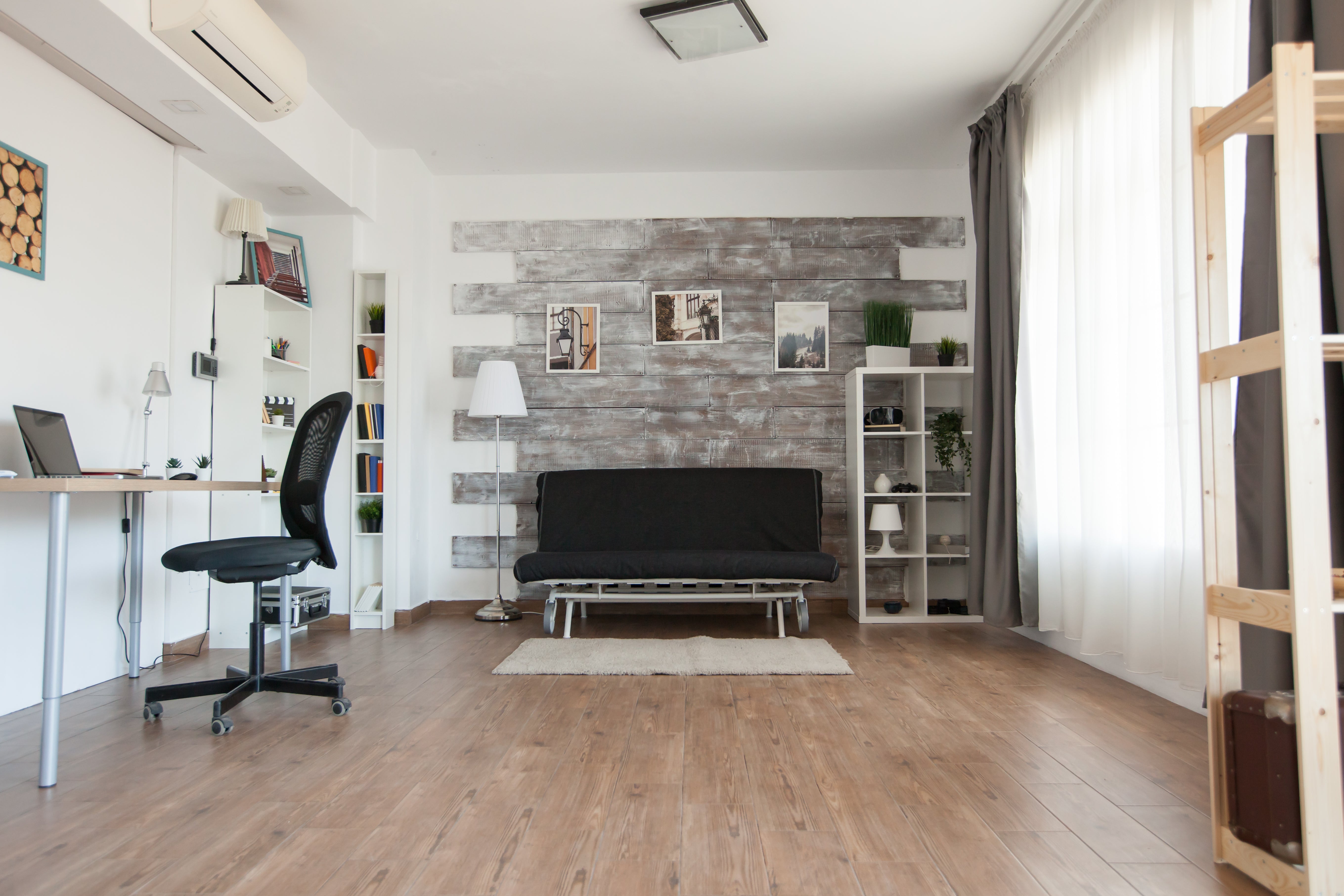
A home office or workspace needs art that supports focus without fighting for attention. You look at your walls for hours, often while reading, thinking, or taking calls, so the canvas you choose has a quiet but real effect on how the room feels. A canvas suits a workspace well. Its soft, matte surface reads calmly in daylight, and a well-chosen composition can bring a sense of openness to a room that might otherwise feel purely functional.
This guide explains how to choose and place a canvas painting in a home office. It covers how to think about the work you do, which compositions suit focus, how to size the canvas to your desk, how to control glare, and how to hang it so it supports your work.
Think about how you work
Start by thinking about your day. Do you spend hours at a screen, reading documents, or on calls? Do you use the room for creative work, planning, or meetings? For focused, screen-heavy work, a calm composition with open space tends to suit best. For creative work or brainstorming, a more energetic scene can add a sense of momentum. Many people find a middle ground works well: a canvas with some movement, but a settled overall feel.
Choose a composition that supports focus
Compositions with clear shapes and open space feel steadier than busy ones. A landscape with a simple horizon, a soft floral study with generous background, or a calm abstract with flowing lines can all work well in a workspace. These images give your eye somewhere pleasant to rest during breaks without pulling your attention from the screen. Look at the canvas from your usual seat. If your eye keeps returning to a busy corner of the picture, it may be too demanding for everyday work. A calmer piece will hold your attention only when you want it to.
Keep the colours balanced
Colour in a workspace should feel clear and steady. Warm earth tones such as ochre, tan, and terracotta can make a room feel grounded and welcoming. Soft greens and muted blues feel calm and balanced. Very bright reds and high-contrast black and white can be tiring to look at for long periods, so use them sparingly. Match one or two tones to your desk, chair, or shelving. A connected palette makes even a small room feel considered. If your walls are a strong colour, a canvas with a lighter background can help the room feel more open.
Size the canvas to the desk
A canvas above a desk looks best when it relates to the desk's width. A common approach is to make the canvas about two-thirds of the desk width, or a little narrower, and to keep the composition centred. On a side wall, aim for a piece that leaves comfortable space at each edge, so the room does not feel crowded. In a small office, one well-scaled canvas usually works better than several small frames. A single piece gives the wall a clear focus, and it avoids the clutter that can make a workspace feel busy.
Hang it where it supports your work
Placement matters as much as the painting itself. A common guideline is to hang the centre of the canvas at roughly 57 to 60 inches from the floor, close to average eye level. Where there is a desk below, the bottom edge of the frame often looks best a few inches above the desk surface or the shelf beneath it. Think about what you see while you work. Avoid placing a glossy canvas directly in your line of sight, where a window or lamp could cause glare. A wall to the side or behind you is often a better choice, since it gives you something pleasant to look at during breaks without interfering with the screen.
Control glare
Glare is one of the most common problems in a home office. A glossy finish can reflect a window or desk lamp, and that reflection can be distracting when you look up from your work. A matte or satin finish is usually easier to live with, since it reduces reflections and keeps the image clear in bright light. If your office has a window nearby, check the wall at the times of day you work. A canvas that looks clear at noon may be hard to see in the afternoon sun. Adjust the position, or add a sheer curtain if needed.
Light the canvas gently
A warm lamp placed to one side can bring out the canvas's colour during the evening without causing glare on the surface. Avoid aiming a bright light straight at the painting, since the reflection can make it hard to see and can tire your eyes. Check how the canvas looks under the lighting you use for work, as well as in daylight.
Traditional guidance on study and work spaces
Many people also look to Vastu when choosing art for a study or office. Vastu is a traditional practice rather than a scientific one, and guidance varies between sources. Several Vastu guides recommend uplifting imagery for workspaces, and some suggest calm landscapes or balanced abstracts for study rooms. Many advise against chaotic or dark imagery in areas used for focus. Directions differ widely between guides, so if direction matters to you, consult a practitioner you trust. The most practical approach is to choose a calm, balanced canvas that helps you concentrate.
Practical checks before you buy
Confirm the exact dimensions, and whether they refer to the canvas or the frame. Check the canvas type, whether it is stretched neatly, and whether the edges are finished. Look at how the canvas will sit on your wall with a paper template, and check how it looks in the light you have while working. Read the delivery and return terms. Large canvases need careful packing, and a clear damage policy helps if a piece arrives marked. Think about the hanging hardware too: a secure fixing matters in a room where people are often moving around.
A simple checklist
- Think about how you work, and choose a composition that suits focus or creative energy.
- Keep the palette balanced, and match one or two tones to your desk or chair.
- Size the canvas to about two-thirds of the desk width, or a little narrower.
- Hang the centre near 57 to 60 inches from the floor, with the frame a few inches above the desk.
- Choose a matte or satin finish, and avoid placing glossy art opposite a window.
- Light the canvas with a warm, indirect lamp, not a harsh spotlight.
- Check the size, the canvas details, the hardware and the delivery terms.
A canvas painting can make a home office feel calmer and more welcoming without getting in the way of your work. Explore our canvas paintings collection and our paintings collection for calm workspace options.