Cart
0

Vastu Shastra is a traditional system of architecture and space planning that originated in India. Many Indian households use it to decide where rooms, doors, and furniture should go, and wall art is often part of that conversation. People ask which painting suits the entrance, which direction a pooja room should face, and which subjects to avoid in a bedroom.
This guide explains how Vastu is traditionally applied to wall art, room by room. It also separates tradition from fact, because Vastu is a cultural and spiritual practice rather than a scientifically tested method. Use it as a guide to personal choice, not as a rule that must be followed.
What is Vastu Shastra in simple terms?
Vastu, from the Sanskrit word for dwelling, is a body of guidance on how to align a building with the directions, elements and natural light. Traditional texts describe the ideal placement of entrances, kitchens, bedrooms, and prayer spaces. In modern homes, people often apply the principles in a simpler way, focusing on the main entrance, the living room, the bedroom, and the pooja room.
The main directions in Vastu are east, west, north, and south, with corners such as the north-east, south-east, south-west and north-west. Each direction is traditionally linked with certain energies and deities. The north-east, for example, is often described as the most auspicious corner for prayer and calm.
Which wall art is traditionally recommended for the main entrance?
The main entrance is the first place a visitor sees, so many people choose art that feels welcoming and positive. Traditional choices include paintings of Lakshmi, Ganesha, or auspicious symbols such as the Om or the lotus. Place the art on a wall you can see as you enter, and keep the entrance clear and well lit.

Avoid placing art with dark, aggressive or sad imagery at the entrance. Many people also keep the space around the door uncluttered, because Vastu emphasises flow and openness.
What should go in the living room?
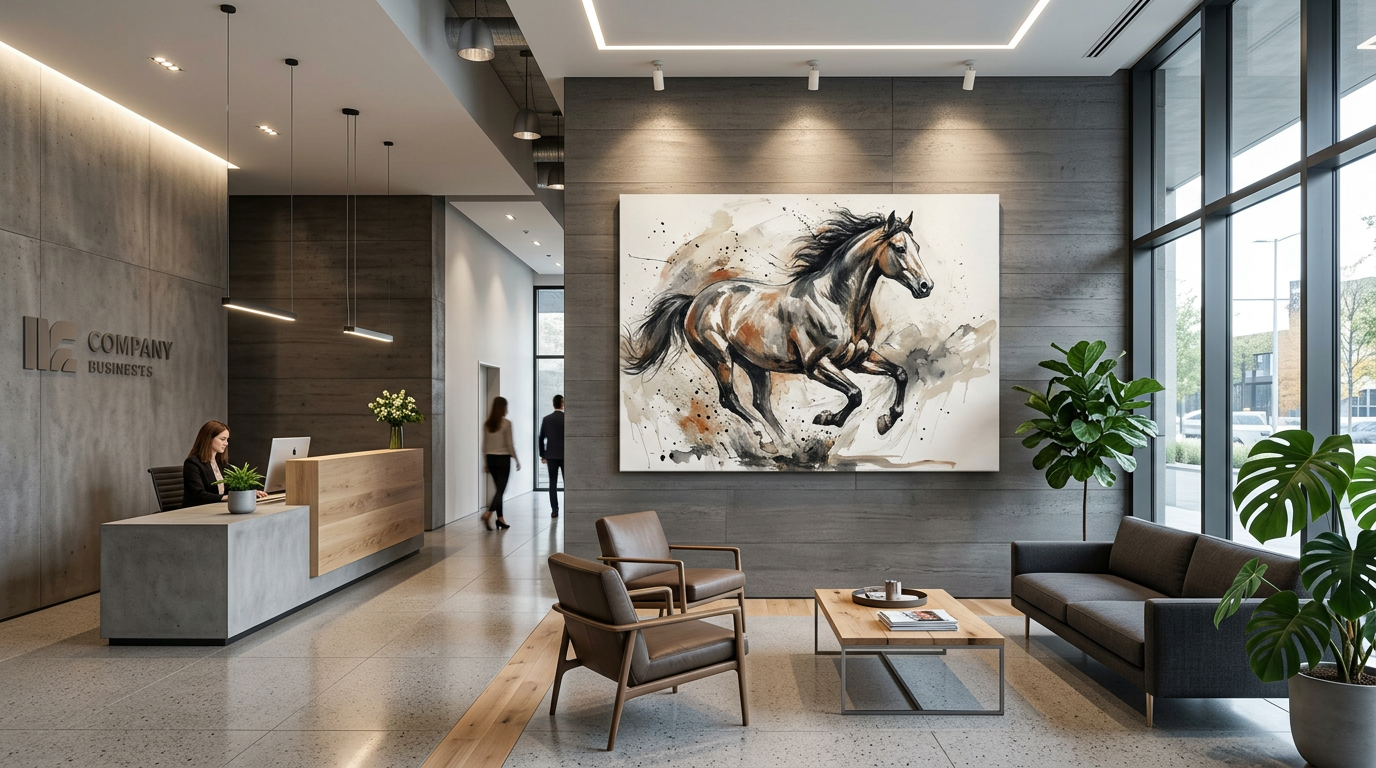
Living room art is traditionally chosen to encourage conversation and warmth. Landscapes, flowers, and horses running towards a sunrise are popular choices. The north or east walls are often recommended for positive or energetic imagery. Avoid placing heavy, dark pieces directly above the main seating, since many people find this feels oppressive.
If you want to explore subject choices in more detail, our paintings for Vastu and Feng Shui collection brings together pieces that many customers choose for this purpose.
How should the bedroom be decorated according to Vastu?
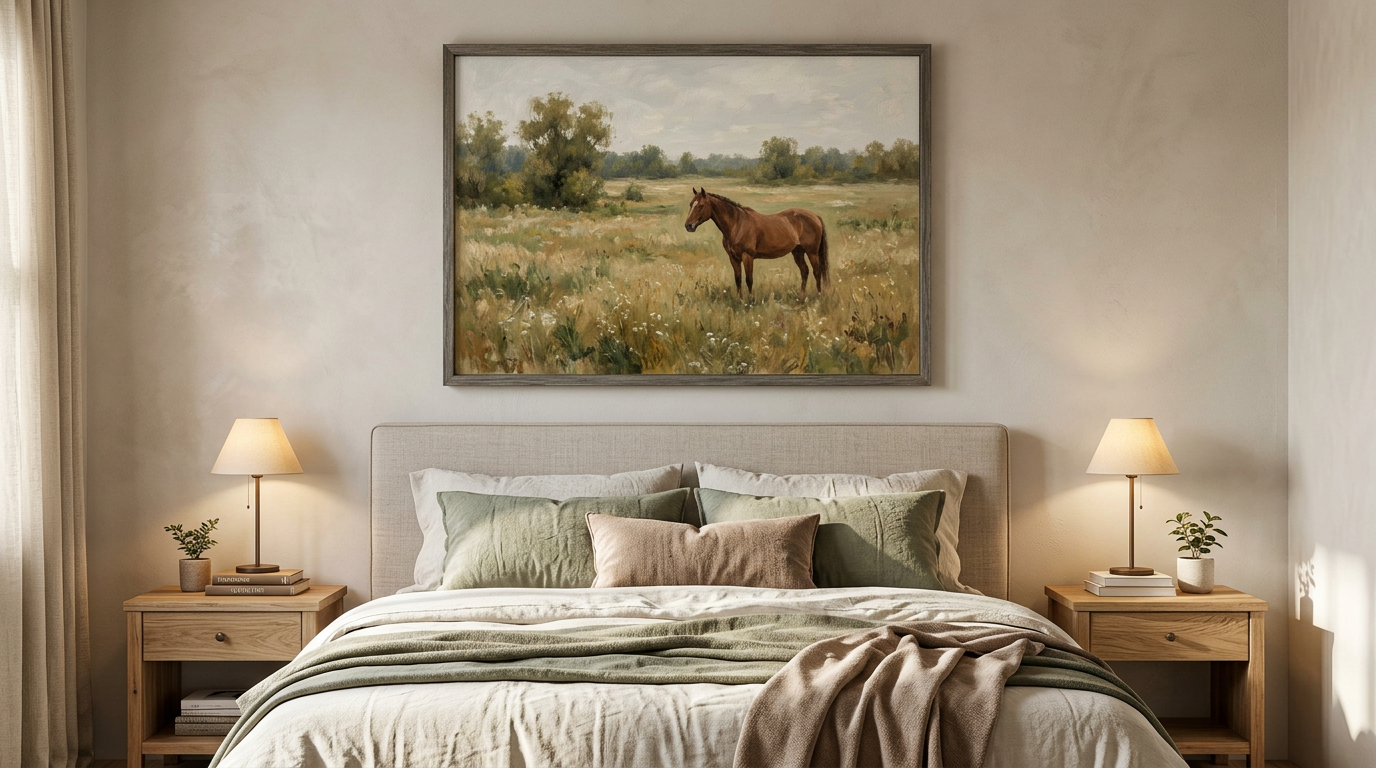
Traditional guidance for bedrooms focuses on calm and rest. Soft landscapes, gentle floral designs, and paintings in cool or soothing tones are commonly chosen. Many people avoid placing images of water, fire, or fierce animals facing the bed, because these are said to create restlessness. Hang art so it can be seen from the bed without being directly above the head.
Which paintings suit the pooja room?
The pooja room is the most spiritually significant space in many homes. Traditional guidance usually recommends the north-east corner for the altar, and devotional images placed at eye level or slightly above, facing east or north when you pray. Choose images of deities that have personal or family meaning, and keep the space clean and respectful.

Our range of religious and devotional paintings includes subjects such as Ganesha, Lakshmi, Shiva, and Buddha, so you can find pieces that match your practice.
Common Vastu wall art myths
- Myth: a painting can fix any problem in the home. Vastu is about balance and atmosphere. Art can support a room's mood but cannot replace good ventilation, light, or structural repairs.
- Myth: every direction has one correct painting. Traditional texts vary by region and school. Choose what feels right for your household.
- Myth: only expensive art works. Vastu guidance concerns placement and subject, not price.
How to choose Vastu-friendly wall art
- Start with the room's purpose: entrance, living room, bedroom, or prayer space.
- Choose a subject that matches the mood you want, such as calm, prosperity, devotion or energy.
- Check the wall's direction and natural light. Bright, balanced light is generally preferred.
- Hang the art at a comfortable height, with the centre near eye level.
- Keep the wall around the art clean and free from clutter.
Buying Vastu wall art online safely
Before you order, check the final size, the frame options, and the delivery timeline. Most paintings dispatch within one working day, and delivery usually takes 5 to 7 working days after dispatch. Shipping within India is free. If your order arrives damaged or incorrect, report it on WhatsApp within 24 to 48 hours with photos. For full details, read our shipping policy and return and refund policy.
Frequently asked questions
Is Vastu wall art scientifically proven?
No. Vastu is a traditional practice rooted in cultural and spiritual belief. Many people find it helpful for organising their homes, but it is not a scientific method.
Which direction should a pooja room face?
Traditional guidance commonly suggests the north-east corner for the prayer area, with the person praying facing east or north. Traditions vary, so choose what suits your household.
Can I hang Ganesha art in the living room?
Yes. Many families place Ganesha paintings in the living room or entrance, where they are visible to guests. Keep the piece respectfully placed and clean.
Should I avoid water paintings in the bedroom?
Traditional guidance often suggests avoiding strong water imagery in bedrooms, because it may feel restless. Calm landscapes are a common alternative.
Key takeaways
- Vastu wall art is a tradition, not a proven fact, so choose what feels right for your home.
- Match the subject to the room: welcoming at the entrance, calm in the bedroom, devotional in the pooja room.
- Keep art at eye level and the wall around it uncluttered.
- Check size, frame and delivery details before you order.