Cart
0
Many people choose wall art with Vastu Shastra in mind. Vastu is the traditional system of architecture and space design that originated in India, and it includes guidance on which subjects, colours, and directions suit a painting. If you are choosing a canvas for your home, you will quickly find a long list of recommendations, and you may notice that the sources do not always agree.
This guide explains what Vastu guidance commonly says about canvas paintings, where the advice differs, and how to make a sensible choice. Vastu is a traditional practice rather than a scientific one, so the points below describe traditional guidance, not guaranteed outcomes.
What Vastu says about wall art in general
Most Vastu guides treat artwork as part of the energy of a room. The idea is that the images we look at every day can influence how we feel, so paintings are chosen with care. Several themes come up repeatedly across published guides. Guides commonly suggest choosing images that feel uplifting and open, such as calm landscapes, gentle nature scenes, and balanced compositions. They often advise against images that show violence, conflict, or decay, and many suggest avoiding paintings that feel heavy or gloomy in shared rooms. Complete, undamaged images are generally preferred to cropped or worn ones.
Living rooms: the most recommended place
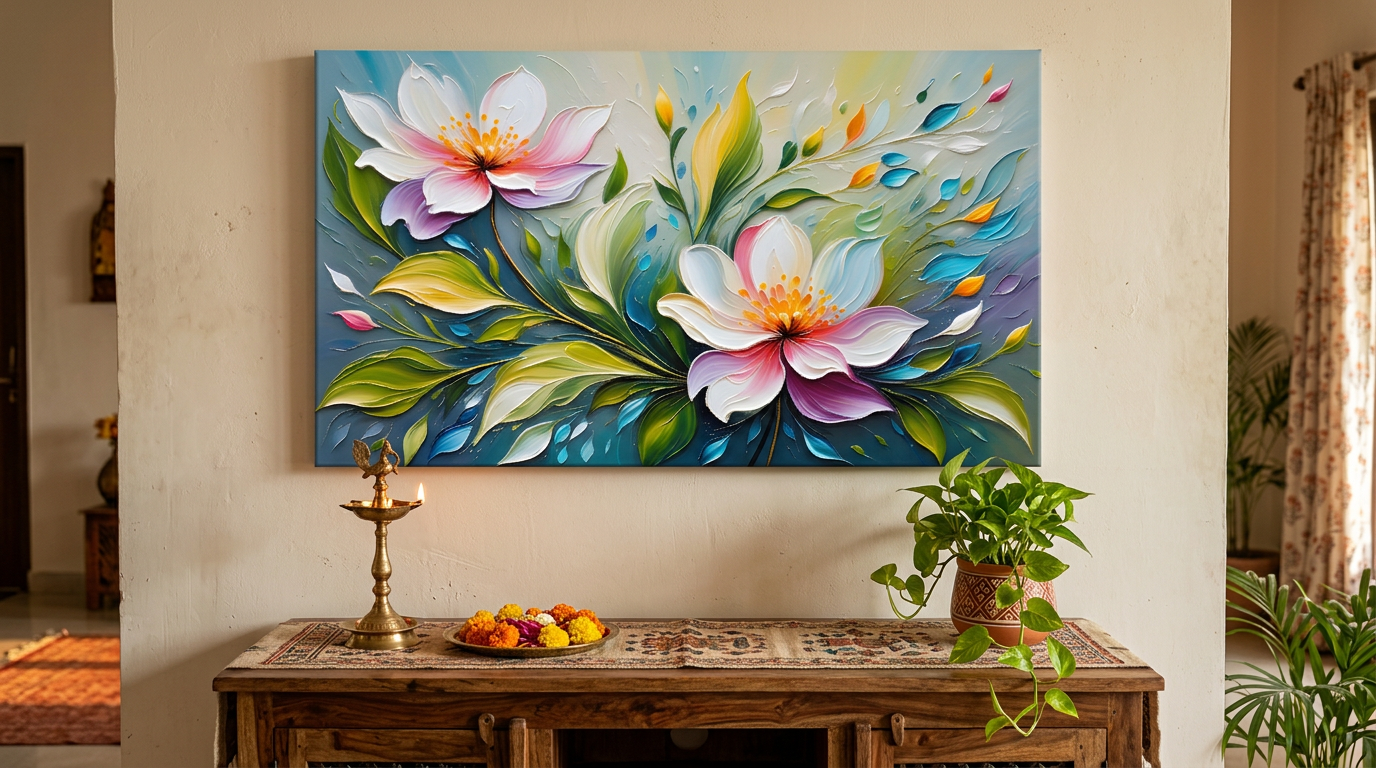
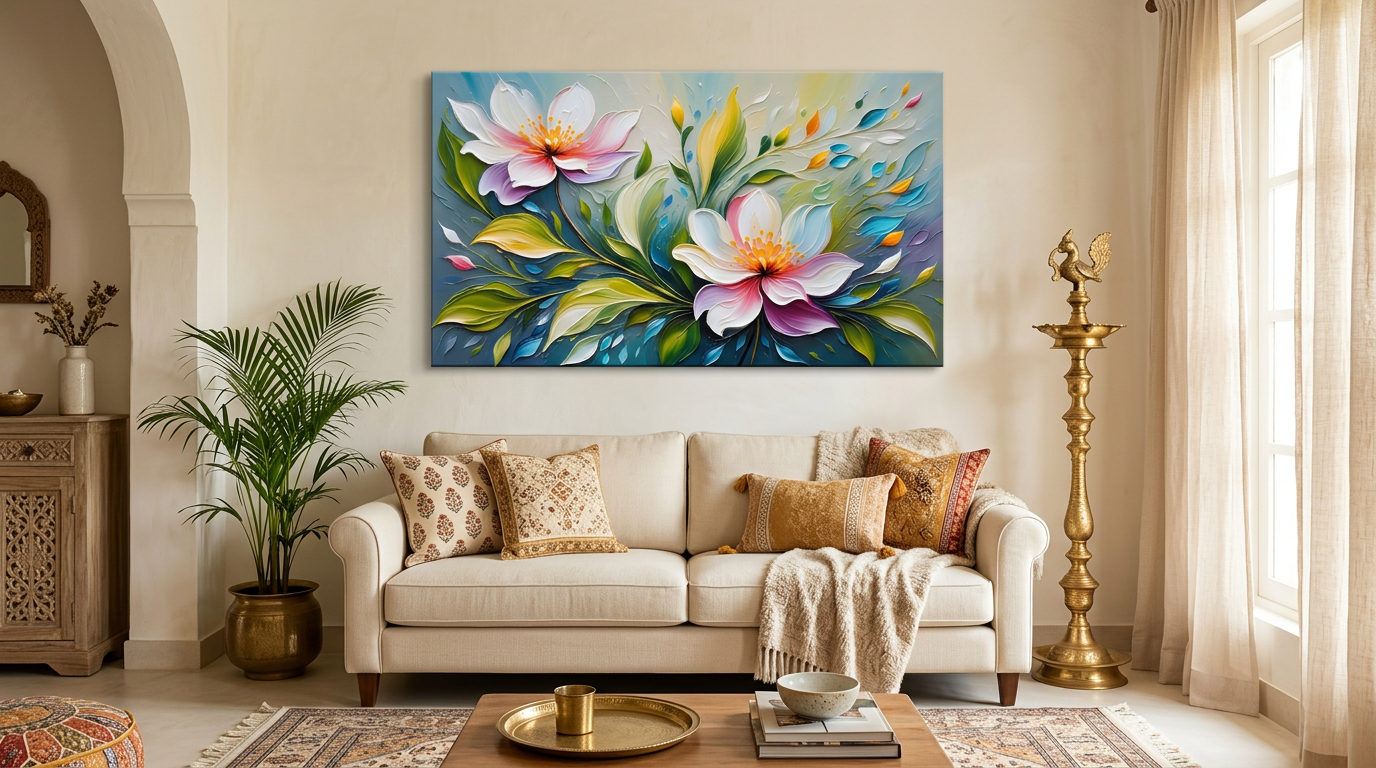
Almost every Vastu guide that covers wall art names the living room as the best place for a painting. It is where families gather and guests are welcomed, so many traditions place the most positive imagery there. For a living room, guides often recommend welcoming subjects. Landscapes with flowing rivers, greenery, horses in open space, and bright floral scenes appear often in these lists. Guides usually advise against stormy skies, turbulent water, and aggressive scenes in shared rooms.
Bedrooms and other rooms
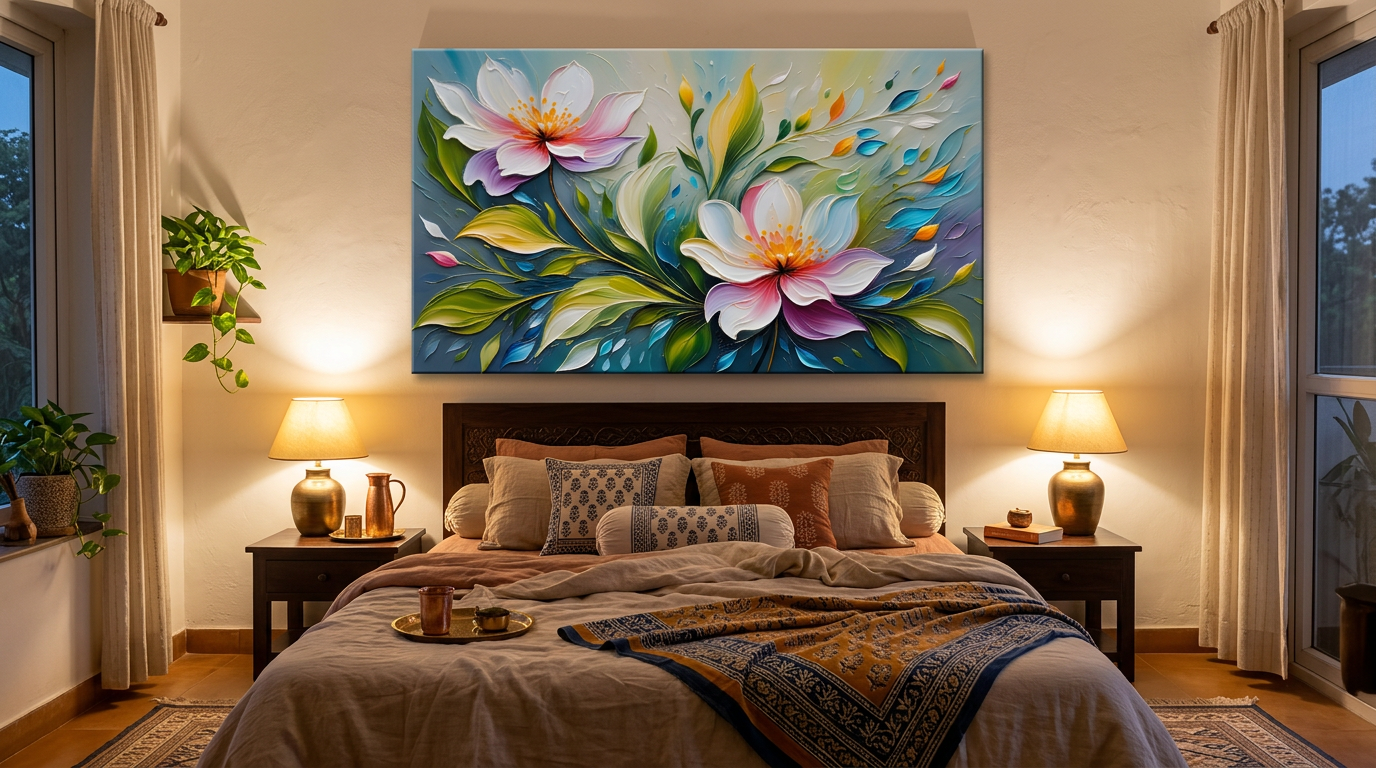
Bedrooms are a common point of disagreement. Some guides advise against lively or energetic imagery in the bedroom and suggest calm, quiet subjects instead. Others suggest that bedroom art should be chosen mainly for restfulness. Almost all guides agree that bathrooms and kitchens are not suitable for artwork. Many also advise keeping devotional images in a dedicated prayer space rather than a general room.
Direction: where guides disagree
Direction is where Vastu advice is least consistent. Different traditions and different authors assign different directions to different subjects, and one guide may name a direction for a painting that another guide places elsewhere. For example, several guides suggest the north or east wall for uplifting and prosperous imagery, because these directions are associated with growth and openness. Others suggest the south wall for stronger, more energetic pieces, while some advise against water imagery on the south wall because of the fire element they associate with that direction. Some guides recommend the north-east for light, calming imagery, while others say heavy furniture or artwork should not block that corner. Because the guidance differs, a sensible approach is to choose the direction that fits your room and layout, and to stay consistent with the principles you believe in. If direction matters deeply to you, consult a Vastu practitioner you trust, since they can take the full layout of your home into account.
Colours: the advice is more consistent
Colour is one area where Vastu guides tend to agree more closely. Many suggest that light, soft colours such as white, cream, pale yellow, and light blue suit most walls and rooms. Earthy tones such as beige, brown, and terracotta are often recommended for spaces that need grounding. Guides frequently advise against very dark colours, especially black and deep grey, in living areas, since they can make a room feel heavy. Some guides also link particular colours to particular directions. These associations vary between sources, so use them as guidance rather than rules.
Subjects that guides commonly recommend or avoid
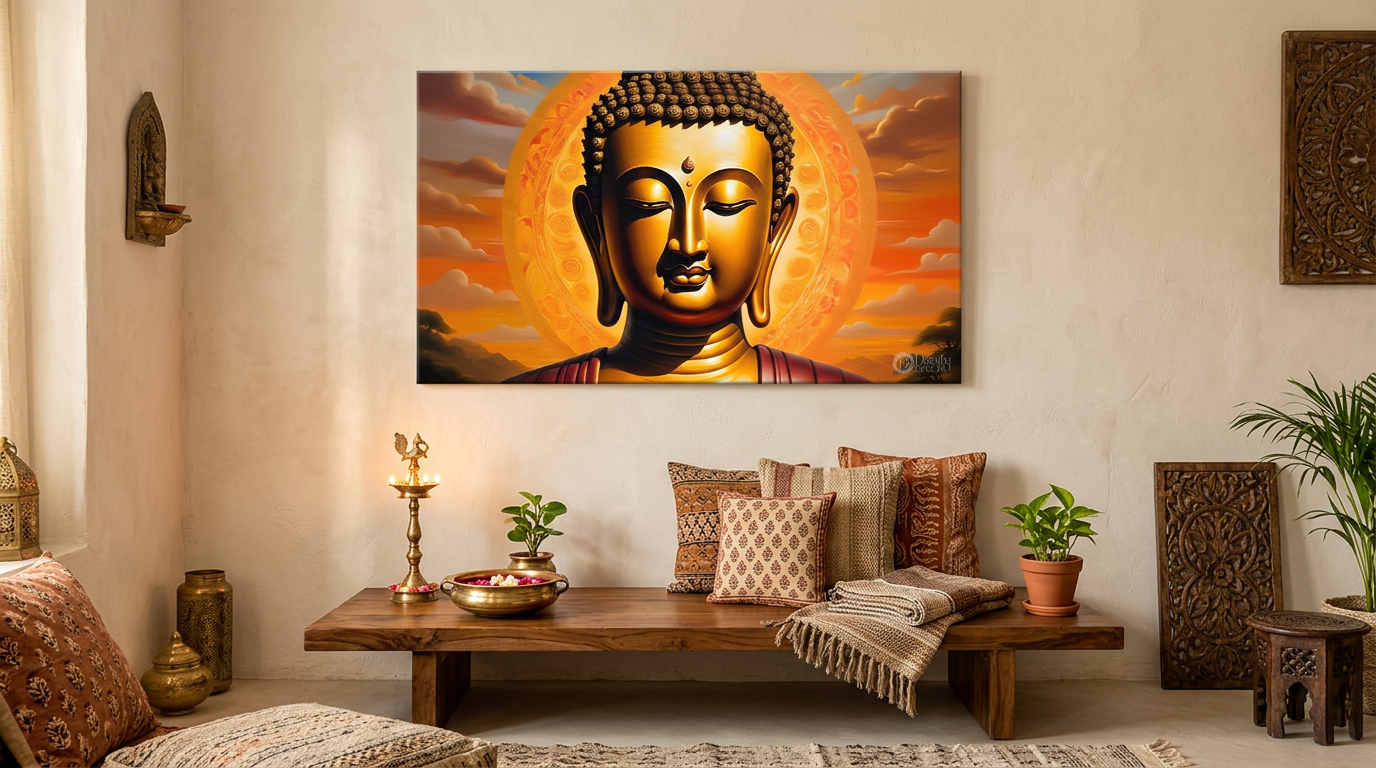
Calm landscapes with greenery are popular, though guides differ on where water imagery should sit. Horse paintings are frequently recommended for living rooms, usually with the advice that the horses should appear free and unrestricted, with no ropes, chains, or barriers in the picture, and with peaceful expressions preferred. Religious and devotional images appear in many guides, often with advice to place them in a clean, respectful space rather than a busy hallway or bathroom. Many guides advise against placing sacred images where they might be disrespected, such as near shoes, bathrooms, or kitchens. Abstract art is treated differently across sources. Some guides say abstract pieces are neither good nor bad in themselves, while others advise avoiding chaotic, dark, or unresolved work, and suggest choosing abstract pieces with calm, flowing compositions.
Placement tips that apply to almost every guide
A few practical points appear in most Vastu guides and also make good design sense. Avoid hanging a painting on a wall that directly faces the main door, since many guides say this can disrupt the flow of energy. Avoid overcrowding a wall, since too many pieces can create visual clutter. Keep paintings clean and undamaged, and replace worn or torn pieces, since most guides consider damaged art unsuitable. Hang the artwork at a comfortable height, usually with its centre around 57 to 60 inches from the floor, so it is easy to see and enjoy.
How to choose a canvas you will love
Start with the room and the feeling you want it to have. Choose a subject that feels uplifting to you, and check that the image is complete and calm. Look for colours that suit the room, and avoid very dark pieces in shared spaces unless they are balanced with lighter tones. Then decide on direction, using the traditions that matter to you. If guides disagree, choose the placement that works for the layout of your home and the way you use the room. Use a paper template on the wall before you drill, and live with it for a day. Finally, look at the practical details: the exact size, the canvas or frame, the finish, and the delivery and return terms.
A simple checklist
- Choose uplifting, complete and calm imagery for shared rooms.
- Keep dark and chaotic pieces out of living areas, or balance them with lighter tones.
- Use direction as a guide, and check guidance with a practitioner if it matters to you.
- Avoid hanging art directly opposite the main door, and avoid overcrowding the wall.
- Hang the centre around 57 to 60 inches from the floor.
- Replace damaged pieces, and choose pieces that suit the room and the people who live in it.
Explore paintings and canvas options that suit your home in our canvas paintings collection and our paintings collection.