Cart
0
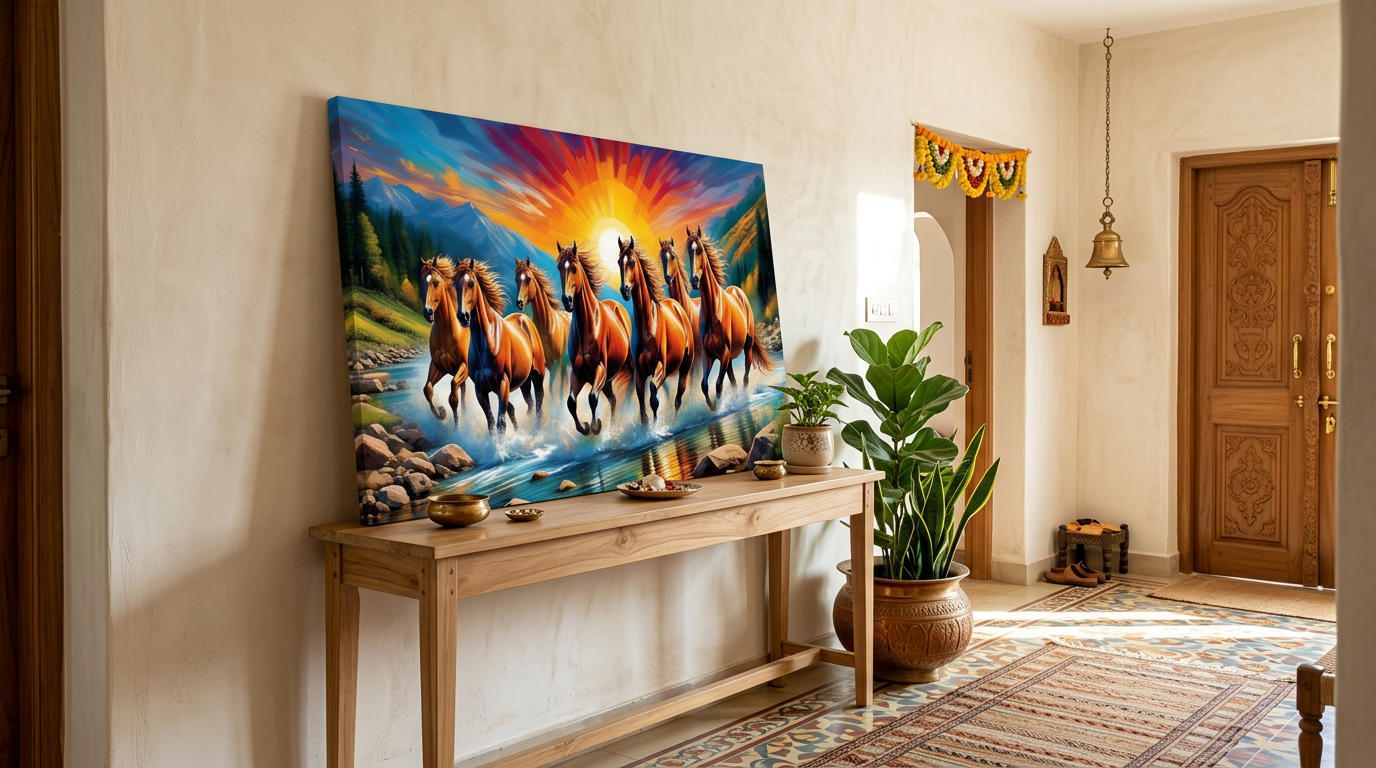
Horse paintings are among the most popular choices for Indian homes. They appear in many styles, from calm single portraits to bold herds across open landscapes, and that variety means most homes can find a piece that fits. The challenge is not finding a horse painting you like. It is choosing one that suits your room, your walls, and the way you live, especially when you cannot see the piece in person before you buy.
This buyer's guide walks through the decisions that matter most: how to choose a style, how to size the piece, how to match colour, what to check in a listing, and how to make sure the painting arrives in good condition.
Decide what you want the painting to do
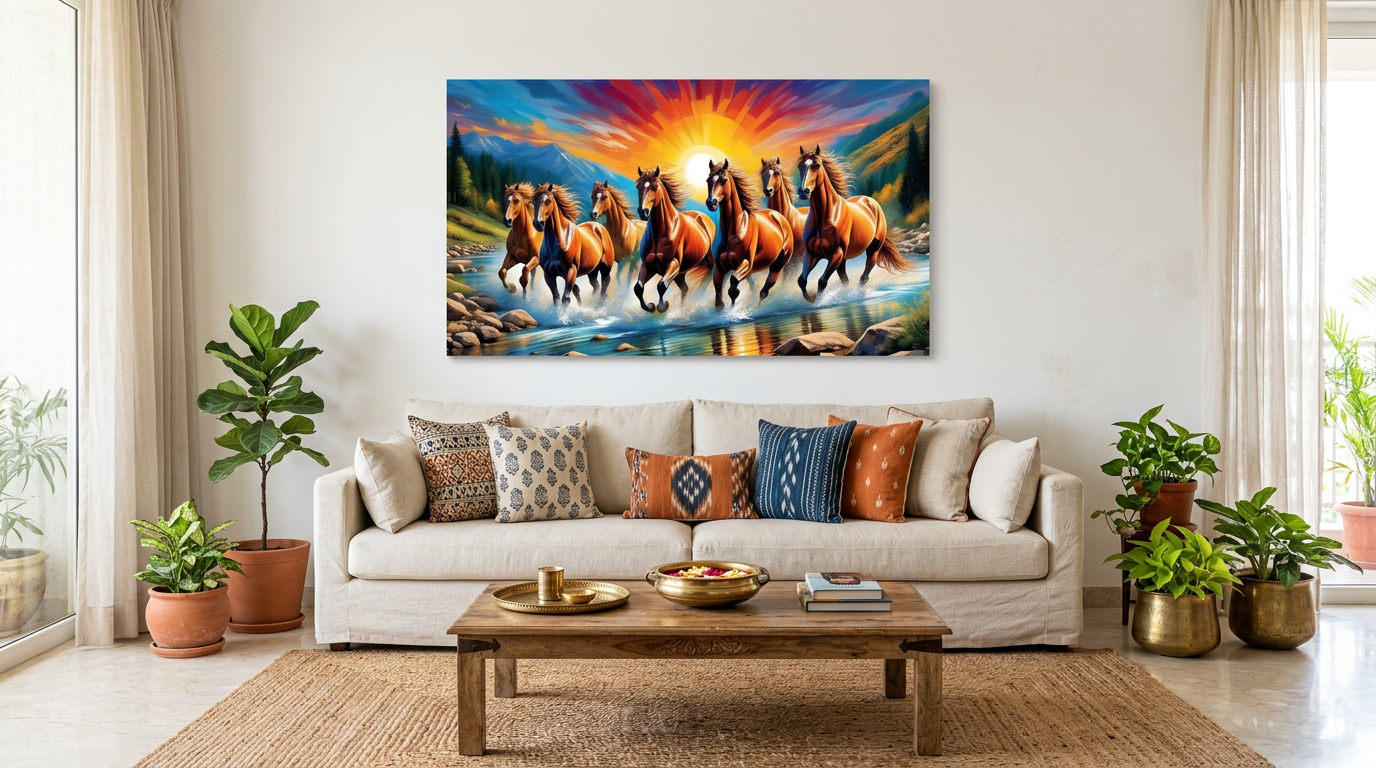
Start with the job you want the painting to do in your home. Some people want a strong focal point that gives a room energy. Others want a calm piece that softens a space. Some are looking for a gift, or a piece that marks a particular room, such as a reading corner or a bedroom. A running horse with an open sky suits a lively living room and a sense of forward motion. A single horse standing quietly suits a calmer room where you want a settled feeling. A herd can work well on a large, open wall, but it often feels busy in a smaller space.
Choose a style that matches your interior
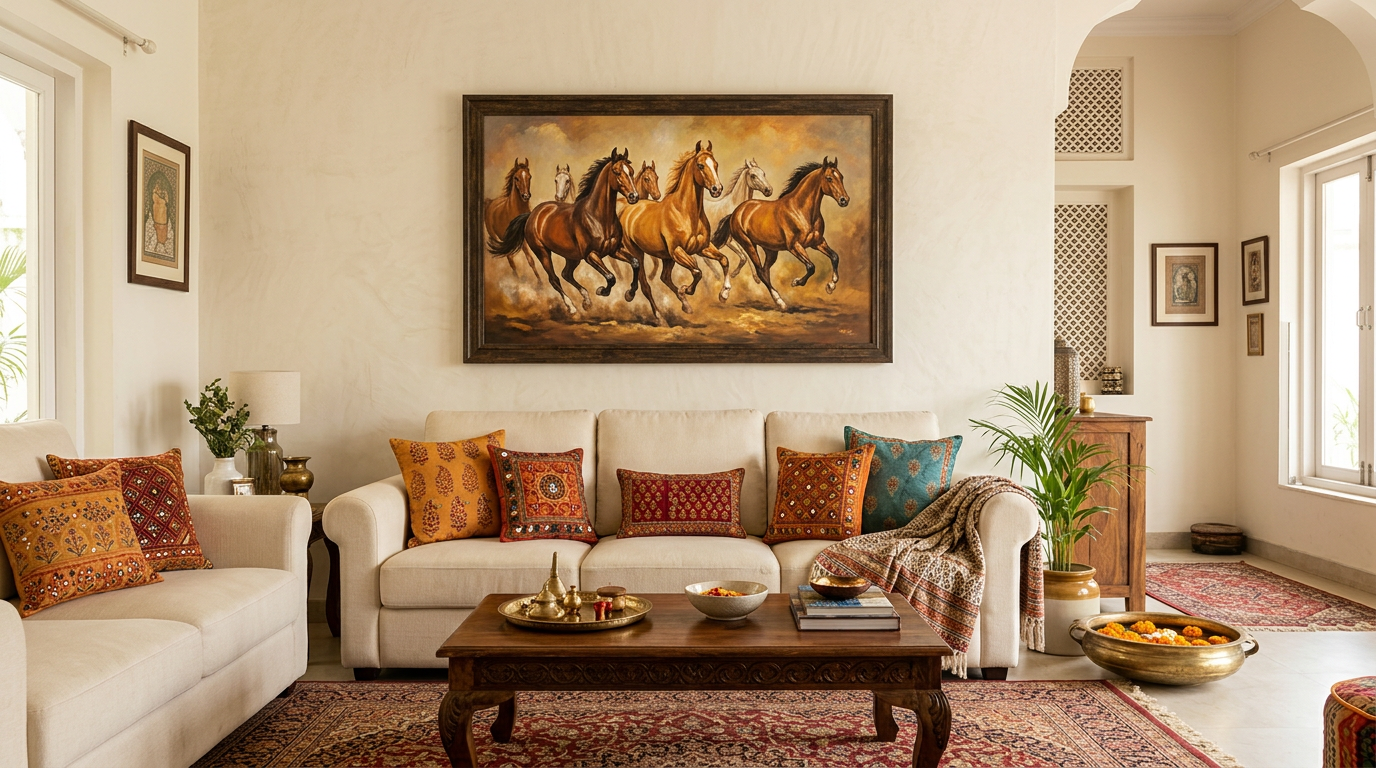
Think about the rest of the room before you look at individual paintings. Traditional Indian interiors with wooden furniture, brass accents, and jute or handloom textiles often suit warm earth tones such as ochre, brown, and muted green. Contemporary homes with clean lines and neutral furniture may suit lighter backgrounds and simpler compositions. Horse paintings also vary in finish. Some are hand-finished canvases with visible texture, while others are printed, with a smoother surface. Texture can add depth in a room with natural light, while a smooth finish can suit a minimalist interior.
Measure before you browse
The most common reason a painting disappoints is size. Before you start looking, measure the wall where the piece will go. If the painting will hang above a sofa or console, measure the width of that furniture as well. A common designer guideline is to aim for the painting to cover roughly two-thirds of the furniture's width. On an open wall, leave comfortable space at each side so the piece does not touch the corners of the room. Make a paper template of the listed size, tape it to the wall, and live with it for a day before you order.
Colour: keep it connected to the room
Choose one or two colours from the painting that already appear in your room. Look at cushions, rugs, curtains, and wood tones. You do not need an exact match. A shared tone is enough to make the painting feel like part of the room. Neutral or soft backgrounds are generally easier to live with, because they work with changing cushions and rugs over time. If your walls are a strong colour, a painting with a lighter background will stand out more clearly.
Read the listing carefully
When you are buying online, the listing is your main source of information. Check the exact dimensions, and confirm whether they refer to the canvas or the frame. Look for the material and finish. A matte finish reduces glare and suits bright rooms. A glossy finish can make colours look richer, but it can reflect windows and lamps. Confirm whether the frame is included, and whether the piece is ready to hang. Look at several photos, including close-ups that show texture and detail, and use a room photo to judge scale rather than the artwork alone.
Check the seller's delivery and return terms
Art is fragile, and large canvases and framed pieces need careful packaging. Before you buy, check how the piece will be packed, the expected delivery time, and whether shipping is included. Some sellers charge extra for packaging or insurance, so compare the total cost, not just the price of the painting. Read the return and damage policy before you pay. Check how long you have to report damage, what evidence the seller needs, and who pays for return shipping.
What to do when the painting arrives
Unpack the piece carefully on a clean, flat surface, and check for damage to the frame, corners, and canvas. If the delivery allows, inspect the piece before you sign for it. Keep the packaging until you have checked everything. Once you are satisfied, plan the hanging. Confirm the hardware is suitable for the weight, and check the height with your template. For most living rooms, hang the centre of the painting roughly 57 to 60 inches from the floor.
Looking after your horse painting
Dust the painting gently with a soft, dry cloth, and avoid spraying cleaner onto the surface. Keep it out of direct sunlight, away from bathrooms and damp walls, and check the hanging hardware every few months.
A quick buyer's checklist
- Decide what job you want the painting to do in the room.
- Choose a style that suits your interior, and consider texture and finish.
- Measure the wall and any furniture beneath it, and aim for about two-thirds of the furniture width.
- Pick one or two colours from the room to connect the piece to it.
- Confirm the exact size, whether it refers to the canvas or the frame, and whether a frame is included.
- Check the material, finish, and hanging hardware.
- Read the delivery, packaging, and damage terms, and the return policy.
- Compare the total cost, including any extra charges.
Browse our horse paintings collection to find a piece for your home.